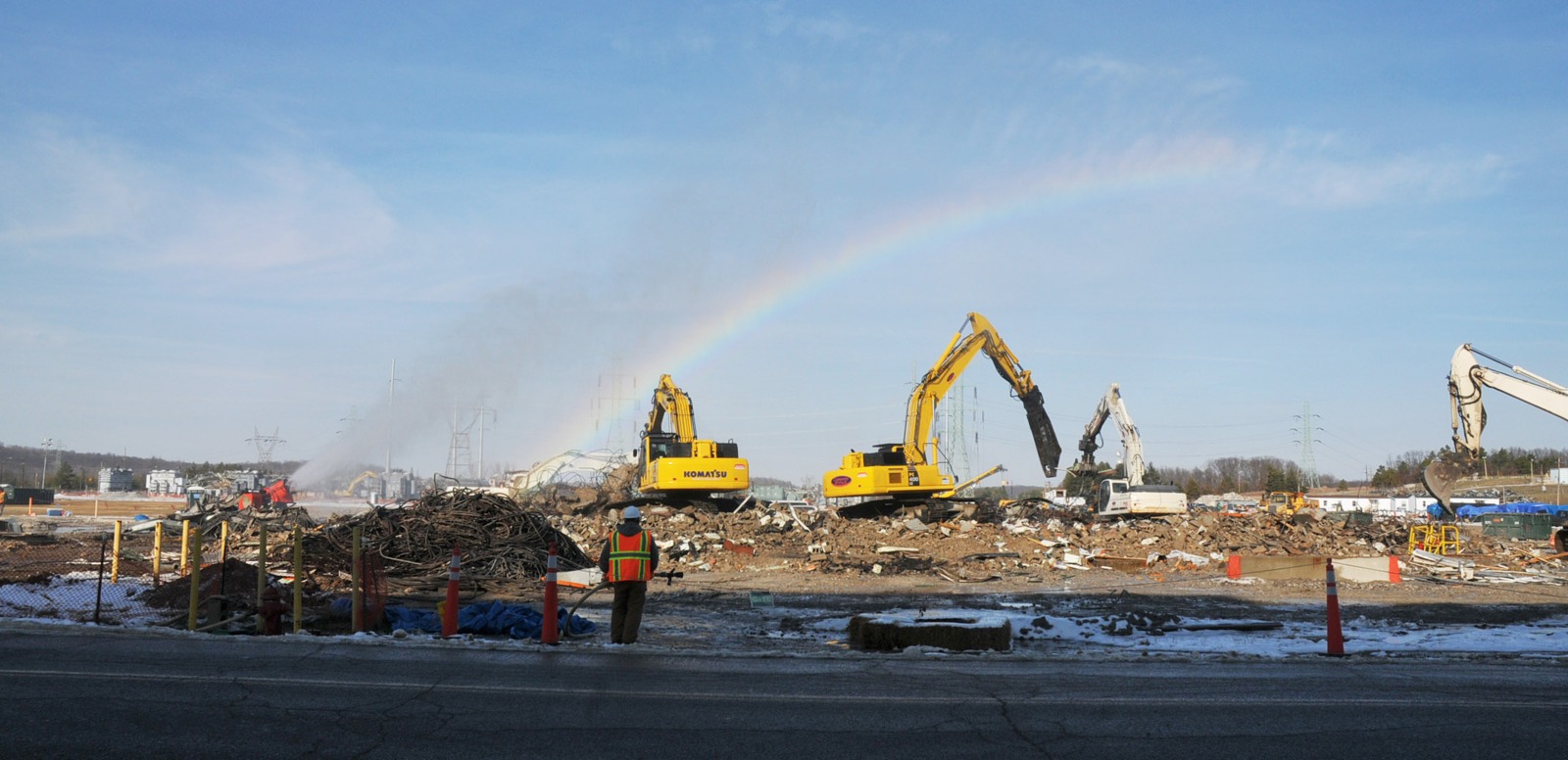
A decision can shape the bill before cost alternatives are compared
Whether land at a former nuclear-weapons site might someday support homes, industry or conservation can change how much contamination must be removed. But DOE officials told federal auditors they could not retrospectively price some of those land-use tradeoffs—and the department rejected a recommendation to compare different potential uses before future cleanup approaches are selected.
What’s the Scoop With Broach compared the cost-information discussion in GAO-27-108063 with the recommendation, agency response and case-study analysis in GAO-27-107791. Both reviews were publicly released October 16, 2026. The original contribution is connecting the backward-looking information gap with the forward-looking disagreement: costs can remain unknown not simply because old records are hard to retrieve, but because the decision process may evaluate cleanup alternatives under only one chosen future-use assumption.
This does not establish that residential cleanup standards are inherently wrong, that DOE can ignore regulators or that cheaper cleanup would adequately protect every site. Future-use assumptions affect exposure, health protection, tribal interests and restrictions on later development. The question is whether the public can see the cost and schedule consequences of viable alternatives before a decision closes off that comparison.
Four sites broadly matched their plans; two used stricter assumptions
The six-site land-use review found that cleanup levels at Oak Ridge, Paducah, Portsmouth and Savannah River generally aligned with initial plans for industrial use in their contaminated areas. At Hanford and Idaho, substantial areas instead received cleanup decisions based on potential residential use, despite initial plans emphasizing conservation, preservation or industry.
The distinction is not a simple percentage of each site that was excavated unnecessarily. Hanford’s cited boundaries include pristine land that required no remediation. Idaho officials said determining the exact status of more than 780 cleanup areas would require substantial historical research. The six sites were selected for varied and complex circumstances, not as a representative sample of every DOE cleanup site.
There are reasons for the stricter decisions. At Hanford, EPA and Washington regulators considered residential use reasonably foreseeable in the relevant areas. At Idaho, officials described protecting possible future residents, anticipated technological improvements, radioactive decay, public perception and tribal considerations. Conversely, DOE officials said actual residential use in some areas near underground waste tanks was unlikely. These competing judgments are part of the record, not evidence that only one party considered public safety.
The missing number is a difference between scenarios, not the entire cleanup bill
Officials told GAO that calculating the additional cost of residential rather than industrial or conservation cleanup would require site-specific excavation and disposal volumes and reviews of hundreds of remediation efforts. Once a use was chosen, costs were generally calculated for that scenario; relevant feasibility studies had not priced both future-use alternatives. The report says even a rough-order-of-magnitude retrospective comparison was unavailable in these cases.
It would be inaccurate to treat DOE’s estimated $641 billion to $840 billion remaining cleanup obligation as the price of this information gap. That range covers fifteen remaining sites and many activities beyond the land-use choices examined here. Nor can savings achieved at completed sites such as Rocky Flats simply be applied as a percentage to Hanford or Idaho. Contaminants, terrain, legal obligations and future uses differ.
The newer land-use report also records a useful exception: at some Savannah River areas, cleanup thresholds based on background contamination levels were the same for residential and industrial assumptions. Officials said supporting residential use there required no additional remediation cost. A stricter-sounding land-use label does not always produce a larger bill.
DOE rejected the prospective comparison; EPA accepted a guidance repair
In the companion legal-framework review, GAO recommended that DOE evaluate and document expected cost and schedule under multiple potential future uses when substantial benefits could be available, before selecting a cleanup approach. DOE’s September 11 written response, reproduced in the report, did not concur and supplied no completion date for that recommendation.
DOE explained that its statutory and regulatory processes already incorporate reasonably anticipated uses, that multiple uses may be considered where uncertainty exists, and that land-use assumptions are identified before cost is used to choose among remedial alternatives. It said it would monitor EPA’s review of guidance and incorporate changes as appropriate.
GAO’s rebuttal identifies the sequencing issue. In its case studies, selecting one assumed future use early meant that later cost comparisons considered only cleanup approaches capable of supporting that use. At Hanford’s 618-10 burial ground, for example, GAO said the 2013 feasibility study and final decision did not evaluate approaches or costs under other potential future-use assumptions. Comparing several cleanup techniques within one assumed land use is not the same as comparing the consequences of different viable land uses.
EPA accepted the separate recommendation to clarify guidance on realistic future uses, the timing of that evaluation and when multiple assumptions should enter later stages. GAO’s public page still listed both recommendations as open when checked October 19. Agreement with a recommendation is not proof that the guidance has changed or that future projects will make the disputed cost comparison.
Reuse announcements do not remove cleanup restrictions
DOE is also pursuing industrial and energy reuse, including data centers. The land-use review describes limited completed transfers or leases at five selected sites and plans for additional projects. It cautions that cleanup remedies have lasting consequences for later use even after a property changes hands. An industrial lease is not a certificate that unrestricted residential use is safe.
The records include both potential economic benefits and concerns about diverting cleanup resources or recontaminating sites. Some announced investment and job figures came from private developers; DOE told GAO it does not calculate the economic benefits of the selected transfers. This investigation does not treat those projections as realized jobs or evidence that a particular cleanup requirement should be relaxed.
This is a comparison of published audit evidence, case studies and the agencies’ written positions, not independent sampling of soil or a new engineering cost estimate. The missing counterfactual prevents a defensible dollar-loss calculation. It also makes the prospective transparency question consequential: if different viable future uses could materially change the cost or duration of cleanup, when will the public see that comparison?
Sources and further reading
GAO-27-108063 — October 16, 2026 land-use review, especially pp. 25–40 and six-site methodology ↗
GAO — land-use review publication details ↗
GAO — framework review and current recommendations, checked October 19, 2026 ↗
Photograph source and attribution: U.S. Department of Energy ↗
Photograph reuse terms: Public domain — U.S. government work ↗