Demand accelerated faster than the permitting controls
Acreage nominated for competitive geothermal leasing on federal land rose from 25,800 acres in 2020 to more than one million acres in 2025. Using the stated endpoints, that is an increase of at least 38.8 times in five years.
The Government Accountability Office found that the Bureau of Land Management still lacked a single system for tracking the status of geothermal permit applications, had not set processing-time goals and had kept key procedural handbooks in draft since at least 2022.
What’s the Scoop With Broach paired the acreage trend with those management gaps. The increase measures developer nominations, not approved leases or completed power plants. It shows rising demand on a permitting system whose timeliness and workload cannot be measured consistently.
| Indicator | Earlier value | Latest value | Change |
|---|---|---|---|
| Nominated acreage | 25,800 (2020) | >1,000,000 (2025) | >38.8× |
| Generating capacity on federal land | — | 2,600 MW | 65% of U.S. capacity |
| Open GAO recommendations | — | 3 | Implementation pending |
Federal lands already carry most U.S. geothermal capacity
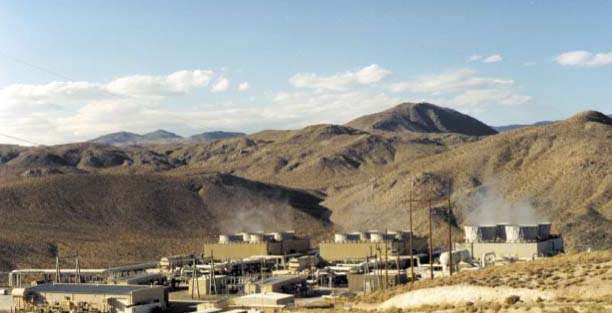
Plants on federal land provide about 2,600 megawatts, 65% of U.S. geothermal generating capacity, according to GAO. The report describes that as enough electricity for more than one million homes. Those figures make administrative delays consequential even though they do not forecast output from the nominated acreage.
Without unified status data, headquarters cannot readily compare field offices, identify the age of pending applications or distinguish agency processing time from time spent waiting on applicants. Without a processing goal, even a complete timeline lacks a defined performance target.
Draft handbooks create a related consistency risk. Staff can rely on laws, regulations and local practice, but an agency-wide finalized procedure is what makes expectations repeatable and reviewable across offices.
Three recommendations remain open
GAO recommended finalizing procedures, improving tracking and setting processing goals. The Department of the Interior did not provide comments on the report, so the public record contains no agency rebuttal or implementation timetable to weigh against GAO’s findings.
The report does not say every delay is BLM’s fault, promise that faster permits will yield operating plants or evaluate the environmental merits of a particular proposal. Geothermal development also depends on exploration risk, transmission, financing and required environmental review.
This investigation’s contribution is the minimum 38.8-fold demand calculation and the connection between that growth and the three measurable control gaps. Progress can be checked against finalized handbooks, a unified queue and published timeliness goals rather than announcements alone. No interviews were conducted.
Sources and further reading
GAO-26-108040 — Geothermal Energy: BLM Needs Better Permitting Procedures, Tracking, and Goals ↗
Photograph source and Energy Department public-domain notice ↗