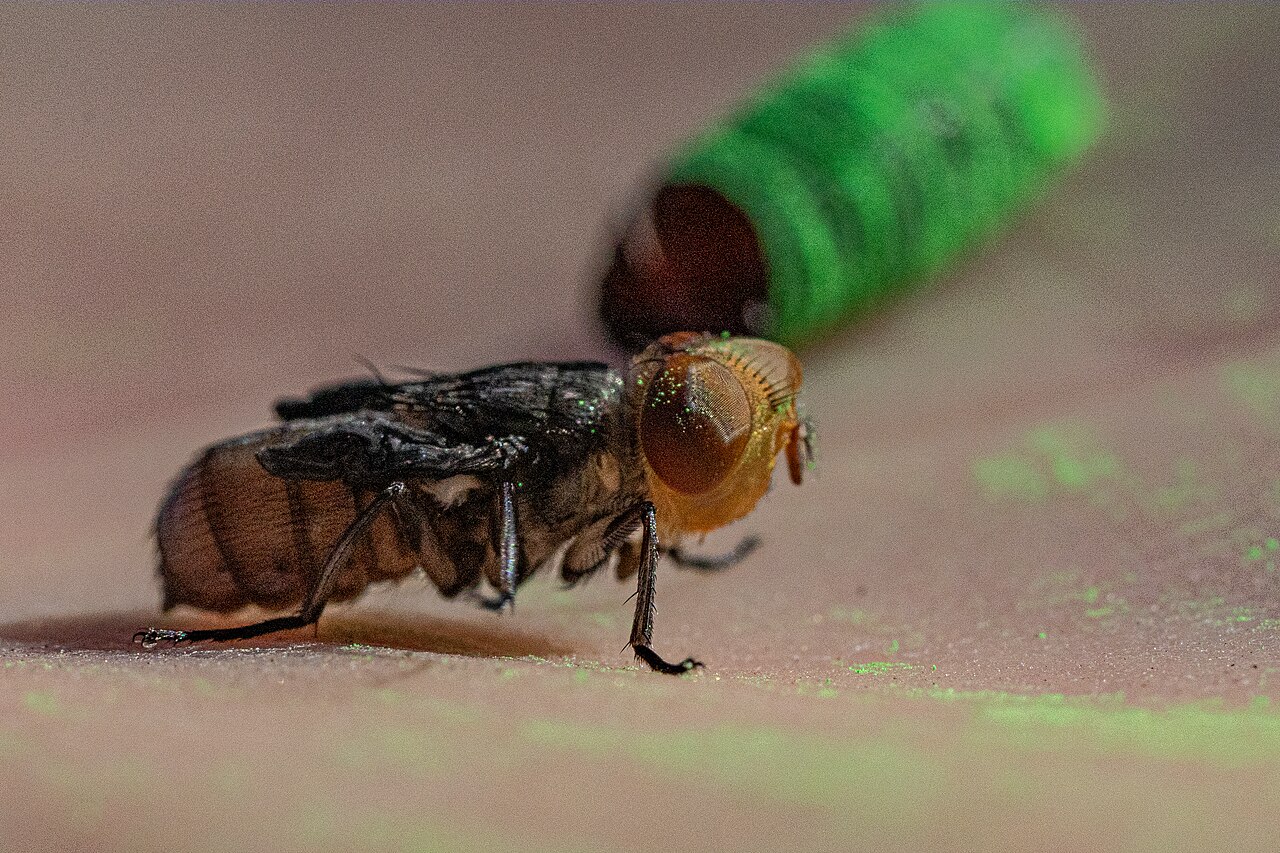
The mature control system was no longer a complete barrier
GAO reported more than 100 New World screwworm cases identified in the United States as of November 2026. The parasite can infest livestock, wildlife, pets and people, and GAO said experts questioned whether existing sterile-fly capacity would be sufficient for new outbreaks.
A U.S.-supported facility in Panama releases about 100 million sterile flies each week. The biological barrier was breached in 2023, and the United States and Mexico released sterile flies during the 2026 outbreak response.
| Indicator | Status |
|---|---|
| U.S. cases by November 2026 | More than 100 |
| Panama facility output | About 100 million sterile flies/week |
| Barrier breach | 2023 |
| Male-only strain | Engineered; emergency exemption sought |
| Gene-drive field use | Not used in the wild |
Two technologies promise efficiency but carry different risks
Male-only engineered strains avoid producing females, reduce feed and facility needs and require less radiation. USDA was seeking an emergency-use exemption from EPA as of November 2026.
Gene drives could spread a self-propagating trait to suppress or eliminate a population. Uruguay had approved caged-fly trials, but the method had not been released into the wild. GAO emphasized regulatory uncertainty and ethical questions; technical promise is not the same as deployment readiness.
The accountability question is capacity before expansion
The public record establishes a gap between an established 100-million-per-week system and expert concern about outbreak capacity. It does not establish that the Panama facility failed, that every U.S. case involved local transmission or that genetic technology is risk-free.
USDA and EPA should publish the response capacity required under multiple outbreak scenarios, the emergency-exemption evidence, containment rules and triggers for expanding production. Without those benchmarks, the public has a case count and a production count but no common denominator for readiness.
Sources and further reading
GAO science and technology spotlight ↗