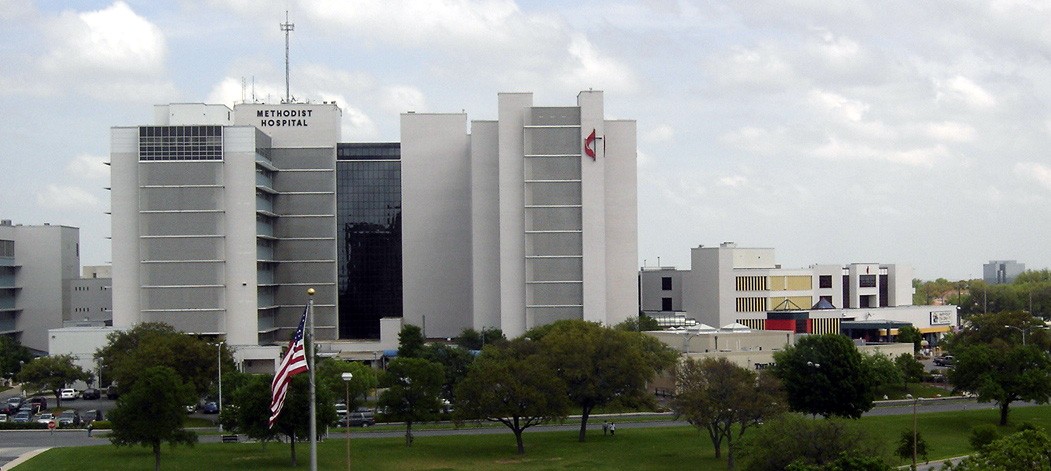
A meaningful correction inside a still-contested finding
Auditors removed two disputed inpatient claims from a Medicare review of Methodist Hospital in San Antonio and lowered the recommended refund from $13,455,341 to $12,499,714. What’s the Scoop With Broach calculated the difference at $955,627, or 7.1%, then traced which findings remained in the September 2026 final report.
That correction is material counterevidence to treating the audit as an unchanged accusation. It also does not resolve the central remaining dispute. Our reconciliation of the sampled dollars finds that inpatient rehabilitation claims accounted for $247,457 of $256,926 in net overpayments—96.3%. Methodist contests those rehabilitation medical-necessity findings and the extrapolation, while acknowledging other coding claims and late assessment paperwork.
The accountability question is how much of the audit survived the hospital’s response, and what exactly the surviving number represents. It is a conservative statistical refund recommendation from selected risk areas, not a final Medicare collection decision, a criminal fraud judgment or an assessment of every claim at the hospital.
The claims count and the dollar count tell different stories
Auditors selected 100 claims from 6,625 claims in identified high-risk categories with $62,048,673 in payments during calendar years 2020–2021. The hospital’s total Medicare payments during those years were approximately $621 million, involving many more claims. The selected frame therefore represented roughly one-tenth of the hospital’s Medicare dollars, not its entire practice.
The sample comprised 20 rehabilitation, 60 other inpatient and 20 outpatient claims. Twenty-seven had compliance errors in the final report: 16 rehabilitation, eight other inpatient and three outpatient. But only 12 rehabilitation claims carried the $247,457 medical-necessity overpayment finding. Ten rehabilitation claims had late discharge assessments, with six overlapping the 12 medical-necessity claims. The remaining four assessment-only errors were still payable.
The union is 12 plus ten minus six, or 16 rehabilitation claims with some compliance issue. Adding the eight other inpatient and three outpatient cases gives the published 27. Treating all 27 as claims with a repayment amount would be incorrect: four involved assessment paperwork for which the amounts remained allowable. The audit explicitly recognizes that distinction.
The other inpatient net overpayments were $8,850 and outpatient overpayments $619. Their combined $9,469 accounts for 3.7% of the $256,926 sampled net overpayments. The hospital said it identified, disclosed and refunded those eleven claims through a self-review requested at the beginning of the audit. Auditors retained them as errors for extrapolation because the refunds followed that requested review. Their repayment does not settle the contested rehabilitation component.
The hospital’s objections changed two findings, not the rest
Methodist challenged 14 draft error claims: 12 rehabilitation claims and two inpatient claims involving the Two-Midnight Rule. After considering its comments and additional information, auditors removed the latter two and reduced the financial recommendation. They also removed the associated training recommendation. This is the source of the $955,627 change; it is not evidence that the hospital has paid that amount.
For rehabilitation admissions, Methodist supplied its own physician’s assessment and argued that the auditors misunderstood rehabilitation physicians’ roles, applied overly technical requirements and should defer to the treating physician’s judgment where the records did not contradict it. The inspector general maintained that an independent medical reviewer had applied the relevant Medicare criteria and that the required reasonable expectation of rehabilitation-physician supervision remained unmet.
The hospital also argued that pandemic flexibilities warranted greater recognition. The report acknowledges that certain intensive-therapy requirements were waived during the public-health emergency, but says the remaining physician-supervision standard applied. We report the disagreement as a dispute between the hospital and auditors; this publication has not independently reviewed the confidential clinical files and does not render a medical-necessity verdict.
A recovery recommendation still has a process
The precise recommended estimate is $12,499,714, the lower limit of a two-sided 90% confidence interval. It is not simply 27% multiplied by hospital-wide payments. It arises from a stratified sample and applies to the selected risk-area frame. The recommendation also excludes amounts presumed unrecoverable under the statutory waiver-of-liability provision, subject to the Medicare contractor’s authority and determinations.
Methodist disputed reopening, recovery and extrapolation as well as the underlying clinical findings. The audit rejected those objections but explicitly states that its recommendations are not final Medicare determinations. CMS and its contractor make overpayment and recovery decisions, with provider appeal rights; extrapolated amounts can be re-estimated following those decisions and appeals.
We examined the complete report, hospital response, sample definitions and financial tables, checked the calculations and rechecked the official publication record on October 15. The reviewed public records do not establish a final recovery of the full recommendation. This is original public-record analysis by What’s the Scoop With Broach. Its contribution is the reconciliation of the draft-to-final reduction, the dollar concentration and the four nonmonetary compliance errors—not a claim of firsthand clinical reporting or a settled debt beyond what Medicare has determined.
Sources and further reading
HHS OIG official publication record; report issued September 14, 2026 ↗
HHS OIG inpatient and outpatient billing audit series; Methodist completed report ↗