The deadlines are in the response, not the headline summary
The Coast Guard agreed to improve marine-fire readiness, but its detailed corrective schedule extends well beyond the training it already launched this spring. What’s the Scoop With Broach examined the September 29 GAO audit and the Department of Homeland Security’s appended September 14 response: guidance on activating prearranged vessel-response resources carries an August 31, 2028 estimated completion date, while work on a long-overdue hazardous-substance rule has a June 29, 2029 milestone.
Those dates are not equivalent promises. DHS says it will begin distributing activation guidance during 2027, before the 2028 completion date. For the regulation, it commits to establishing and advancing regulatory action through an appropriate rulemaking milestone. It does not promise that a final, effective rule will exist by June 2029.
The accountability question is which operational safeguards a new training announcement actually fixes, and which remain on a longer schedule. A comparison of the report and the response shows separate repairs for training access, local coordination, shared lessons, activation decisions and regulatory coverage.
Existing law and missing authority are different problems
The audit identifies two different legal gaps. For tank vessels, the Oil Pollution Act of 1990 already required regulations addressing worst-case hazardous-substance discharges. GAO identifies an August 18, 1992 statutory deadline, a proposed rule in 1999 and withdrawal in 2019. It says the mandate remains unmet. Coast Guard officials cited competing rulemaking demands and limited resources.
For nontank vessels using alternative fuels, GAO identifies a different issue: the statutory definition and delegated authority do not allow the Coast Guard to require the hazardous-substance response plans at issue. That is why it asks Congress to consider changing the law for those vessels, while separately recommending the Coast Guard use its existing authority for tank vessels.
Calling both issues a need for new congressional permission would erase the decades-old tank-vessel obligation. Calling both failures to enforce an existing identical rule would erase the nontank authority limit. The distinction matters as battery-powered and other alternative-fuel vessels become more common, although the audit’s worldwide fleet figures do not establish how many U.S. vessels lack each type of plan.
What is already done, and what remains scheduled
The Coast Guard and partners launched an eight-hour awareness course and a separate twelve-module online course in April 2026. The audit recognizes those steps. It also found five of nine reviewed sector firefighting plans did not encourage coordination of hands-on exercises or vessel tours. That is 55.6% of the selected plans, not a statistically representative finding about every U.S. port.
In its response, DHS sets August 31, 2027 estimated completion dates for training-coordination guidance and a mechanism to share marine-fire information. Designating existing field positions with coordination responsibilities has a September 30, 2027 date. The agency says it is not specifically resourced for dedicated civilian marine-fire coordinator positions; its proposed repair is to identify responsibilities within existing field staffing.
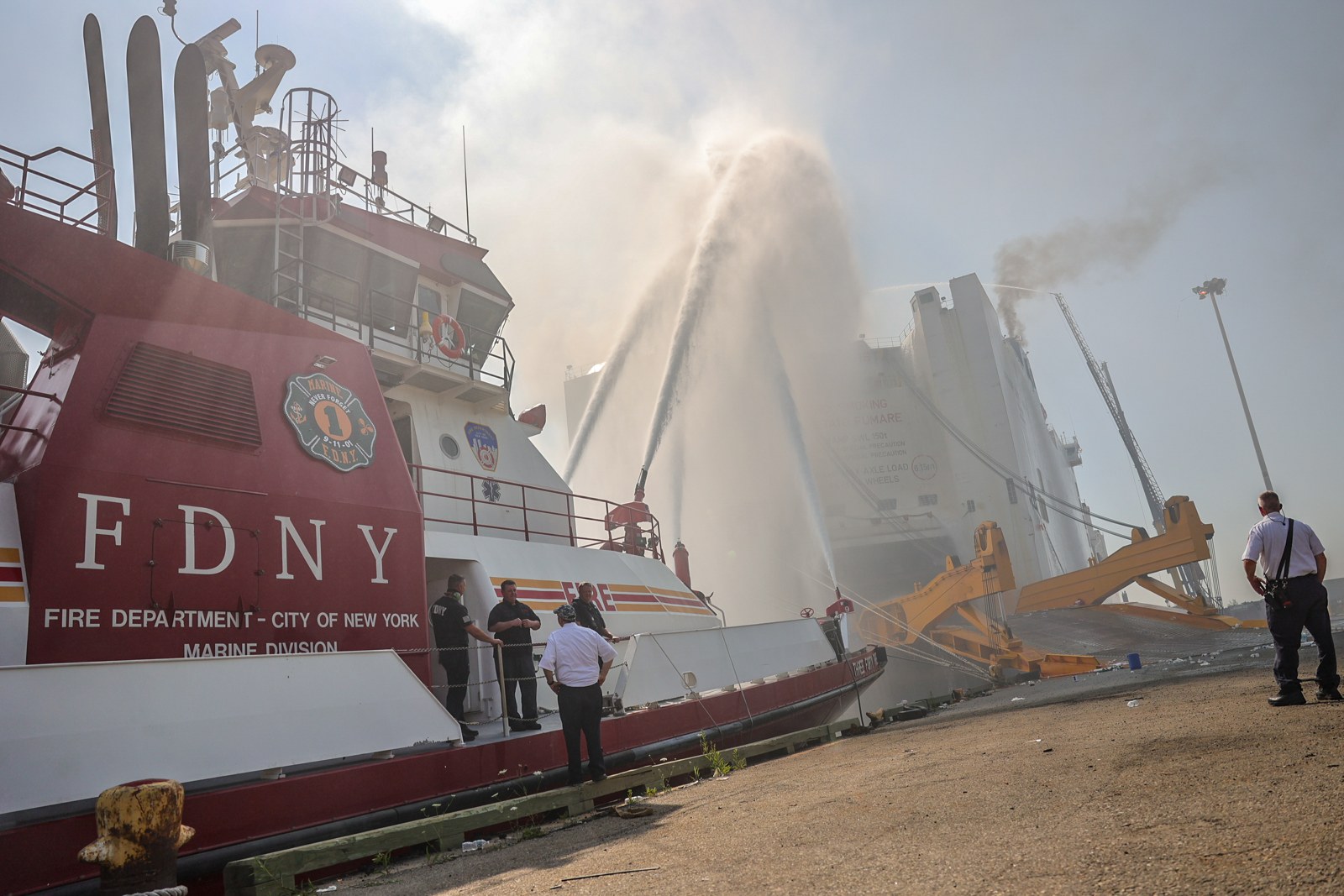
The longer 2028 activation-guidance schedule concerns when to call on resources already arranged in vessel-response plans. The audit cites the Grande Costa D’Avorio fire, where the plan was activated eight hours after the fire began and after local firefighters boarded. Two firefighters died during that incident. GAO cites the Coast Guard investigation’s conclusion that earlier activation might have limited fire growth and damage; the public record does not allow us to say a specific guidance deadline caused those deaths.
The evidence is substantial, but not a census of preparedness
GAO counted 886 nearshore fires during 2015–2025, with 206 designated serious—23.3%. The definition covers outcomes including injury, death, specified property damage, vessel loss and certain pollution events. The record separately attributes 55 deaths and 50 injuries to serious fires. These historical totals do not measure how many casualties the recommendations would prevent.
Local fire-department involvement was identifiable in at least 79 serious-fire narratives. The data did not require a dedicated response field, so that count is a minimum and cannot establish that firefighters stayed away from the other incidents. The audit also recognizes the Coast Guard’s coordinating role, while local departments generally perform the firefighting, and the limits on compelling private vessel owners to host training.
We read the complete audit, its methods and the actual DHS response, extracting the response pages for close examination rather than relying on the summary. On October 17, the official page still listed all five executive recommendations and the congressional matter open. Our distinctive contribution is the milestone comparison and separation of the two legal problems. Billy Roach did not visit a port, interview responders or inspect a vessel. The verified record supports monitoring a multi-year repair schedule, not declaring the existing courses worthless or the promised regulation already complete.
Sources and further reading
GAO current executive and congressional recommendation status checked October 17, 2026 ↗
Accessible full audit text and underlying source notes ↗
Photograph source and attribution: Dan Henry / U.S. Coast Guard ↗
Photograph reuse terms: Public domain (U.S. federal government work) ↗