A president responsible for protecting Americans should never leave them wondering whether he just invited a foreign adversary to attack their hometowns.
The words and the White House response
At an October 5 campaign rally in Grand Island, Nebraska, Donald Trump discussed the economic costs of the Iran war before saying: “Let them take out Los Angeles. Let them take out San Diego.” Earlier in the speech, he argued that Iran must be prevented from obtaining a nuclear weapon. That context matters. So do the words he chose.
To my ear, that wording sounded alarmingly like permission. Californians deserve to know why their president would speak that way about cities filled with families, children, workers and military personnel.
The White House disputes that interpretation. As the Associated Press reported, Communications Director Steven Cheung said Trump meant American cities would have faced danger if a nuclear Iran had not been stopped. The administration says he was explaining how he was preventing an attack.
That response belongs in an honest account of what happened. But Americans should be able to expect their president to communicate clearly when discussing the possible destruction of their communities. They should not need a spokesperson to explain afterward that their lives still matter.
San Diego Mayor Todd Gloria demanded a retraction and apology, emphasizing the president’s responsibility to protect every American community. His statement described a city whose residents serve in the military, build ships and advance medical research. These are people with lives and families, and they deserve an unequivocal commitment to their safety.
Why arrest is not automatic
The remarks also raise an understandable question: If an ordinary person spoke threateningly about Donald Trump, would authorities treat those words with the same generosity?
Federal law specifically criminalizes knowing and willful threats to kill, kidnap or injure a president. However, an immediate arrest is not automatic whenever someone makes an alarming statement. The Supreme Court’s decision in Watts v. United States requires courts to distinguish genuine threats from protected political hyperbole. Context matters even when the president is the target.
Whether Trump’s remarks violated a criminal law would require evidence satisfying a particular offense’s requirements. The quotation alone does not establish that he intentionally solicited an attack, and public outrage cannot substitute for that legal determination.
The barriers to presidential prosecution
There are also substantial barriers to prosecuting a sitting president. The Justice Department’s longstanding position is that a president cannot be indicted or criminally prosecuted while in office. Separately, the Supreme Court’s 2024 immunity ruling protects core constitutional acts absolutely and other official acts presumptively, while providing no immunity for unofficial conduct. Whether particular remarks qualify requires careful examination.
Those protections explain why presidential prosecution is complicated. They do not require Americans to excuse reckless presidential speech.
Californians deserve a direct answer
Congress should demand a clear explanation. Trump should retract the wording and personally assure Los Angeles and San Diego that their safety is an unconditional national priority. His supporters should demand that assurance too.
The principle that nobody is above the law must include Donald Trump. Upholding it requires evidence and lawful procedures. It also requires elected officials willing to demand accountability from the most powerful person in the country.
Californians deserve a president who leaves no doubt that he will protect them.
Sources and further reading
Rev: transcript of Trump's October 5, 2026, Grand Island rally (remarks before 12:35) ↗
Associated Press: White House explanation of Trump's remarks, October 6, 2026 ↗
City of San Diego: Mayor Todd Gloria's statement, October 6, 2026 ↗
18 U.S.C. § 871: threats against the president ↗
Supreme Court: Watts v. United States, 394 U.S. 705 (1969) ↗
Supreme Court: Trump v. United States, July 1, 2024 ↗
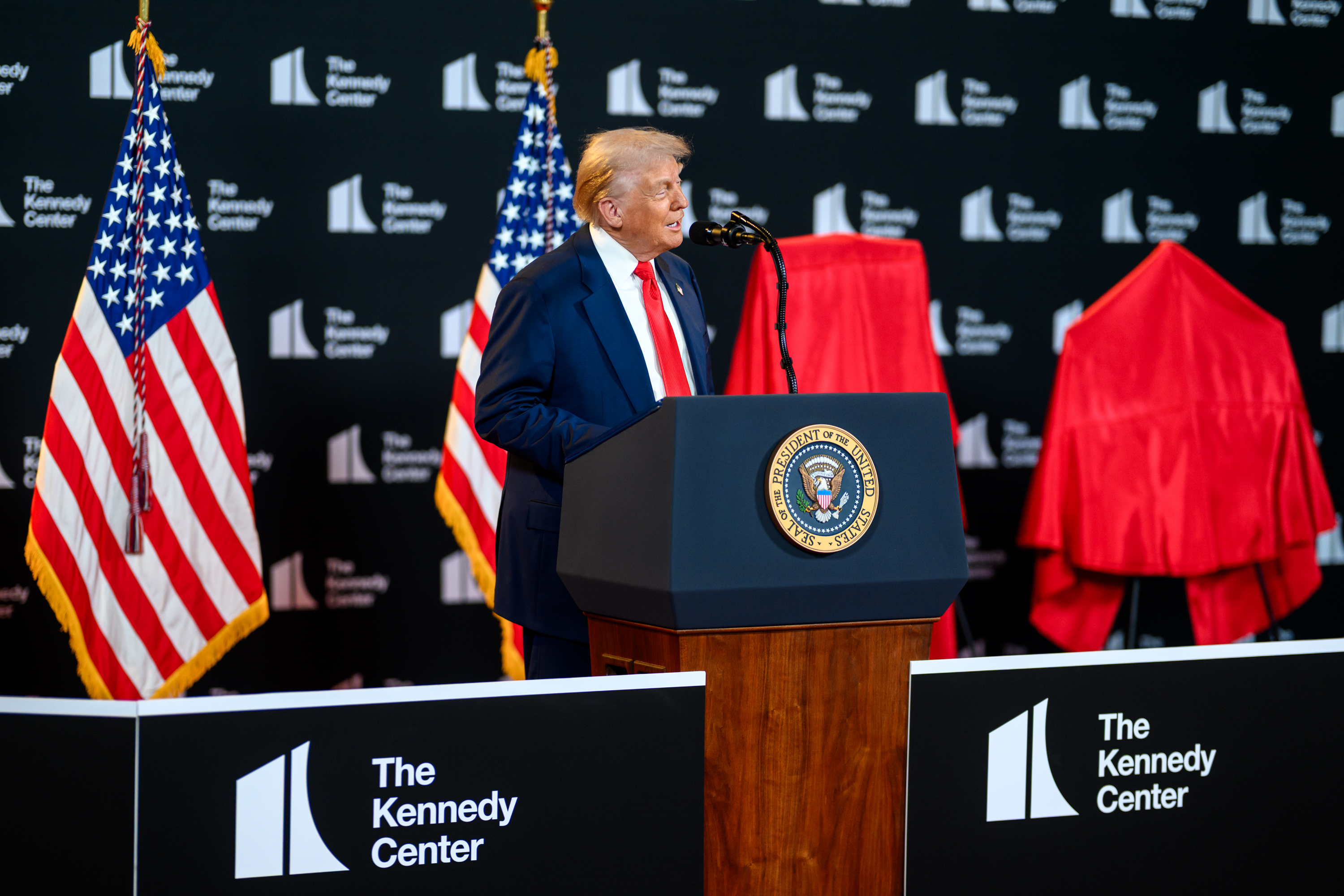
Photo: Daniel Torok / The White House, August 13, 2025 — public-domain U.S. government work ↗