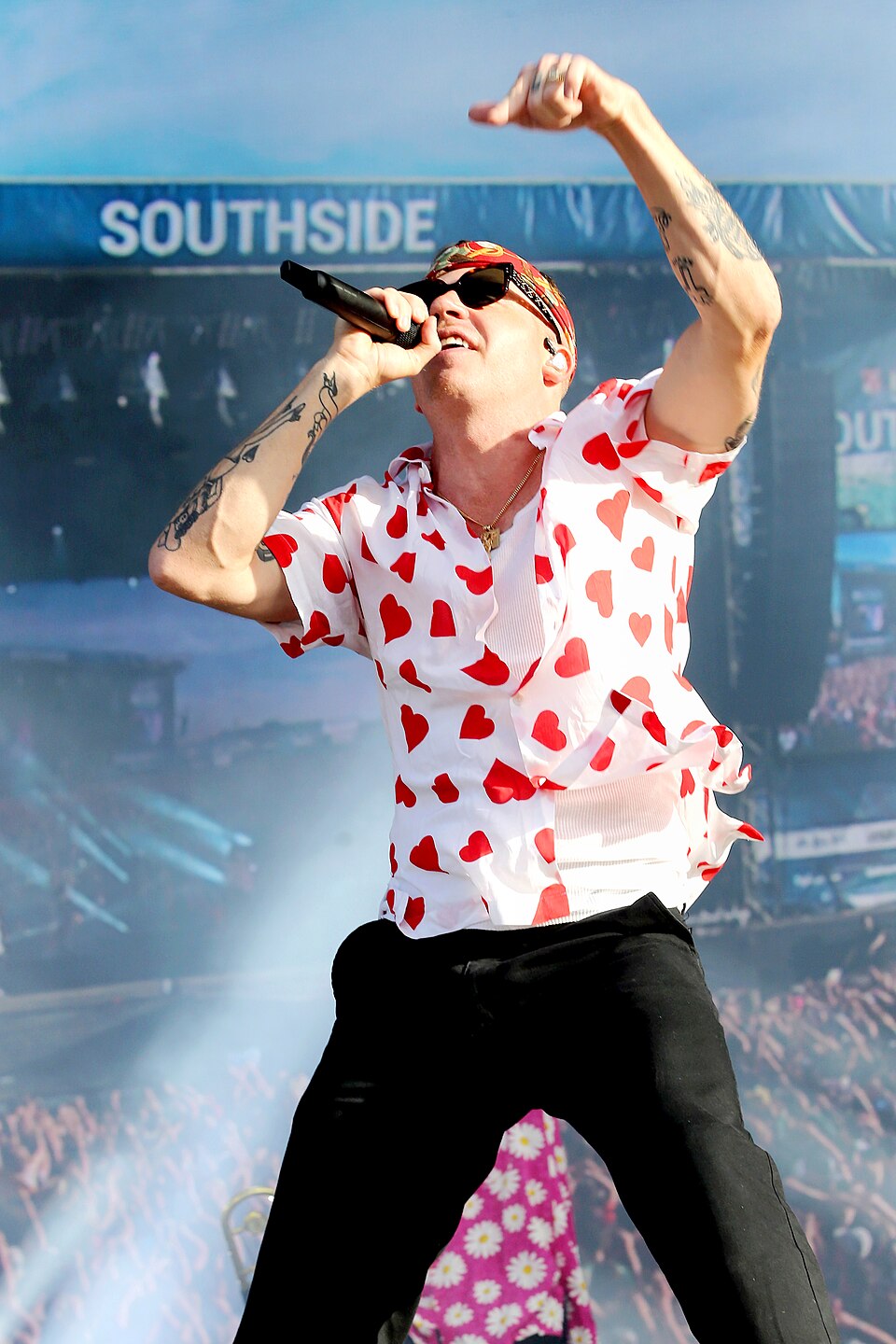
Speaking up for Palestinians has cost Macklemore his remaining appearances on Ed Sheeran’s U.S. Loop Tour. After the rapper brought his support for Palestinian freedom to the stadium stage, the tour promoter confirmed that multiple venues refused to host concerts with him on the lineup. Macklemore was removed.
That outcome deserves scrutiny. A performer used his microphone to confront the suffering in Gaza, and the response from powerful people controlling access to those stages was to close the doors.
In his September 14 statement, Macklemore said he had been delivering the same message on stages for almost three years. He also described the professional consequences of his advocacy, saying he had lost business opportunities, sponsorships and relationships. His appearance alongside Sheeran put that message before an enormous audience—and exposed how costly speaking out could become.
For an artist, losing access to stadium audiences is a serious consequence. It also sends a warning to less established performers watching from the sidelines: challenging the people who control the booking can threaten your next opportunity. An industry that celebrates artistic courage should be willing to defend it when the message becomes uncomfortable.
Speaking out against genocide
The substance of Macklemore’s protest deserves attention. Amnesty International concluded in December 2024 that Israel was committing genocide against Palestinians in Gaza, documenting killings, serious harm and deliberately destructive living conditions. The organization also identified the United States as a key arms supplier and urged governments to stop enabling the atrocities.
That American support makes this an issue American artists and audiences have every reason to confront. When our government helps arm a military committing atrocities, demanding accountability belongs in public life—including music. Calling for an end to a U.S.-backed genocide should never be treated as an unacceptable interruption to an evening’s entertainment.
Venue pressure and the cost of advocacy
Robert Kraft defended barring Macklemore from Gillette Stadium, citing what he considered antisemitic rhetoric and imagery.
Macklemore has explicitly distinguished criticism of Israel from hostility toward Jewish people. That distinction matters. Defending Palestinian freedom and opposing antisemitism are compatible commitments. Both begin with recognizing that human dignity cannot depend on someone’s nationality or religion.
The promoter’s explanation makes the commercial pressure clear: venues threatened the concerts if Macklemore remained. In this publication’s view, removing him under that pressure rewards efforts to make Palestinian advocacy professionally unaffordable. It encourages an entertainment culture in which concern for human rights is welcome only while it leaves powerful interests comfortable.
A message that survives the tour
Macklemore’s response kept the focus on Palestinians. “The victims are the Palestinian people,” he wrote. He said the attention his appearances brought to Palestine gave the performances their value, even after losing the remaining dates.
That refusal to retreat deserves respect. Artists with large audiences have an opportunity to make people look at suffering they might otherwise avoid. Using that opportunity can carry consequences, as this episode demonstrates.
Macklemore lost his place on the tour. His demand for Palestinian freedom still deserves to be heard.
Sources and further reading
Pitchfork: venue objections, tour removal and promoter’s confirmation (September 14, 2026) ↗
The FADER: reporting and full transcript of Macklemore’s statement (September 14, 2026) ↗
ESPN: Robert Kraft’s explanation for barring Macklemore at Gillette Stadium (September 14, 2026) ↗
Associated Press: Macklemore’s pro-Palestinian remarks and removal from the tour ↗
Photograph license: Creative Commons Attribution-ShareAlike 4.0 ↗