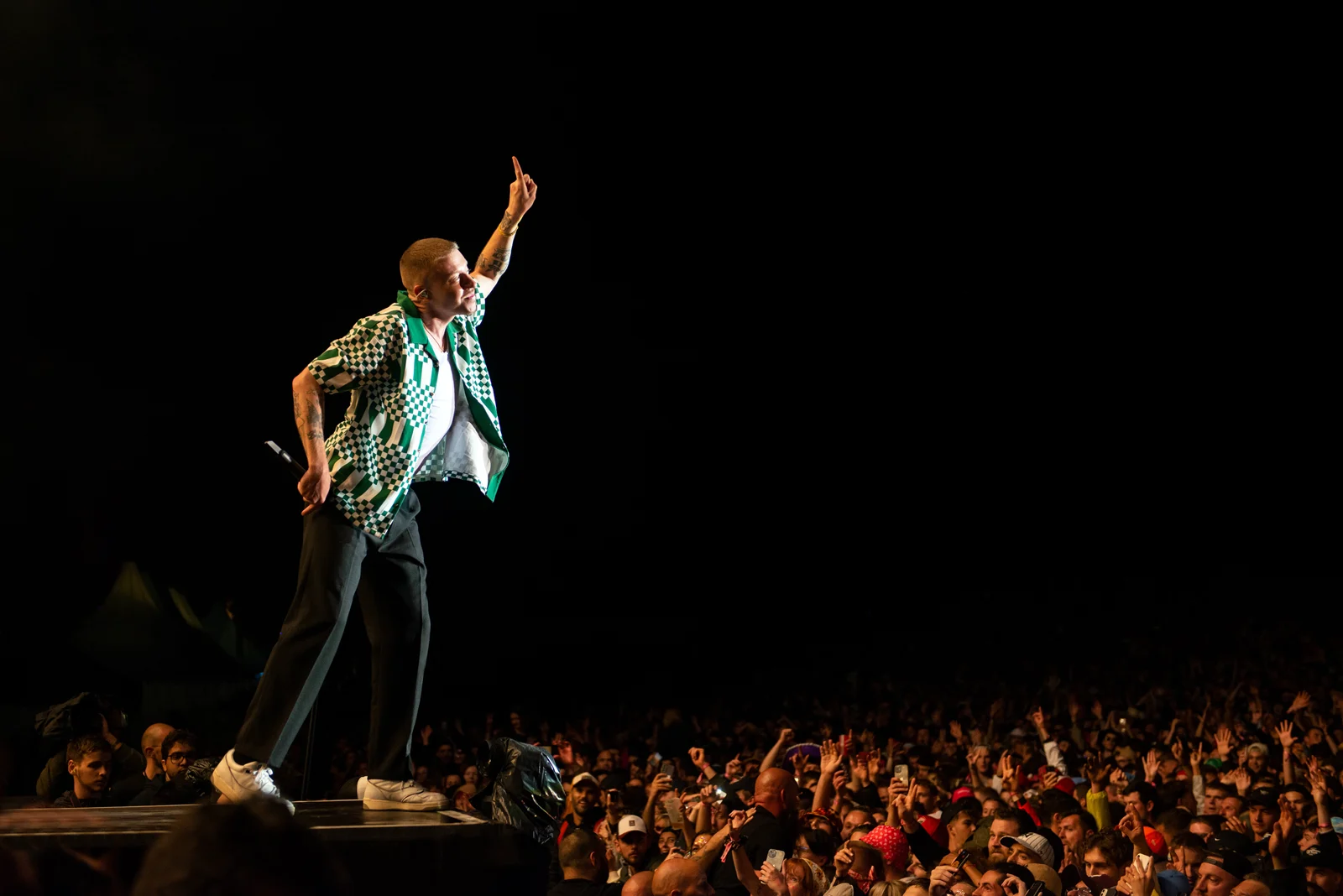
Ed Sheeran should have taken a clear public stand when Macklemore was removed from his tour. His response fell short, and in my view, it puts him on the wrong side of history.
Sheeran’s explanation falls short
According to Reuters, Sheeran says the removal was the promoters’ decision and that he tried to resolve the dispute with the venues. He has defended keeping his professional platform out of politics and continuing the tour for the fans and people whose livelihoods depend on it. Those are his stated reasons, and they should be represented accurately.
But explaining the pressure does not settle the question of leadership.
A headliner with Sheeran’s reach can publicly challenge the exclusion of another artist. He could have made an unmistakable demand that support for Palestinian lives be protected on his stage. He could have told his audience that removing an artist under this pressure was unacceptable. Instead, his public response defended his reluctance to take a political position.
I understand why touring workers and disappointed fans matter. Their concerns deserve serious consideration. So does the message sent when a major tour carries on after an artist is pushed out amid controversy over his advocacy. A public stand might not have saved every show. It still would have told artists and audiences that speaking about Palestinian suffering is worth defending.
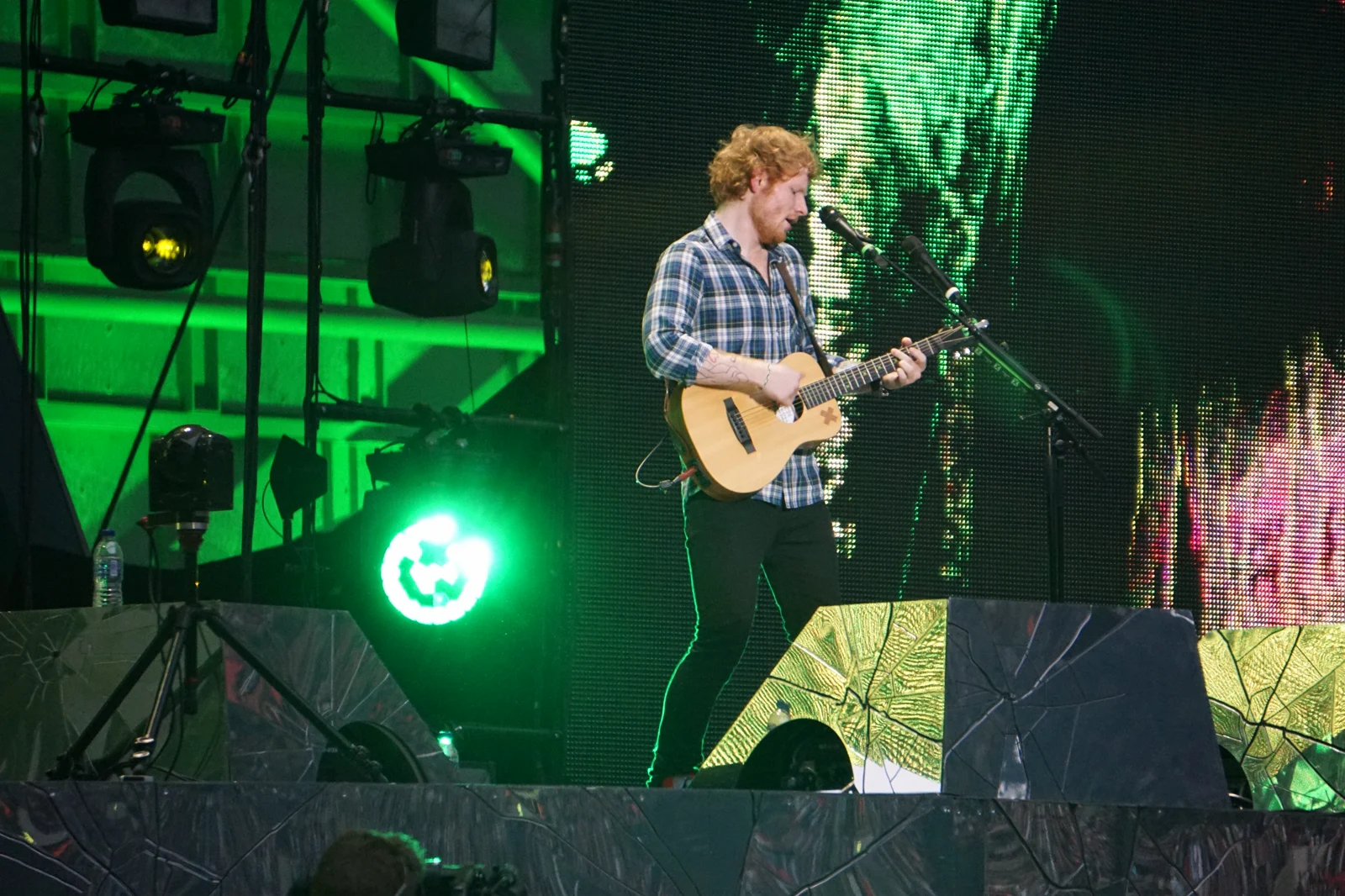
PHOTO: Mark Kent / Wikimedia Commons · Resized and compressed for the web · CC BY-SA 2.0
Macklemore is a voice we need
That is why Macklemore is a voice we need.
An artist willing to speak about Palestinian lives brings that concern to people who might otherwise encounter it only as an argument to scroll past. We need performers who are willing to ask something of their audiences beyond buying a ticket. Supporting that role does not require agreement with every statement an artist has ever made.
ITV News reported that Robert Kraft cited alleged antisemitic rhetoric and imagery in defending Macklemore’s exclusion, while Macklemore has argued that criticism of Israel must not be equated with hatred of Jewish people.
Specific accusations should be examined on their merits. They should never become a blanket justification for treating Palestinian advocacy as unacceptable. Jewish safety and Palestinian freedom are compatible commitments. A music industry serious about human dignity should be capable of defending both.
The power of standing together
The withdrawals by Aaron Rowe, Beoga, FINNEAS and Lukas Graham show what collective solidarity can look like. As ITV News reported, their roles differed: Rowe and Lukas Graham were set to replace Macklemore on remaining U.S. dates, Beoga was performing with Sheeran, and FINNEAS had upcoming South American appearances. Their decisions nevertheless reinforced the same principle: an artist speaking for Palestinians should not be left to face the consequences alone.
In a statement quoted by ITV News, FINNEAS expressed it plainly: “Artists must not be silenced when they speak up for the oppressed.”
Walking away from an opportunity gives that statement weight. These artists risk opportunities by withdrawing. Their actions make it harder to isolate Macklemore, remove him from a running order and assume everyone else will carry on without objection. That is the power of acting together.
Several of their statements also preserved their friendship with Sheeran. As RTÉ reported, Rowe acknowledged what Sheeran had done for his career, and Beoga said their longstanding friendship would continue. Their solidarity did not require pretending those relationships meant nothing.
That makes their stand more compelling. They were willing to make an uncomfortable decision involving someone they cared about. Friendship did not erase their responsibility to speak.
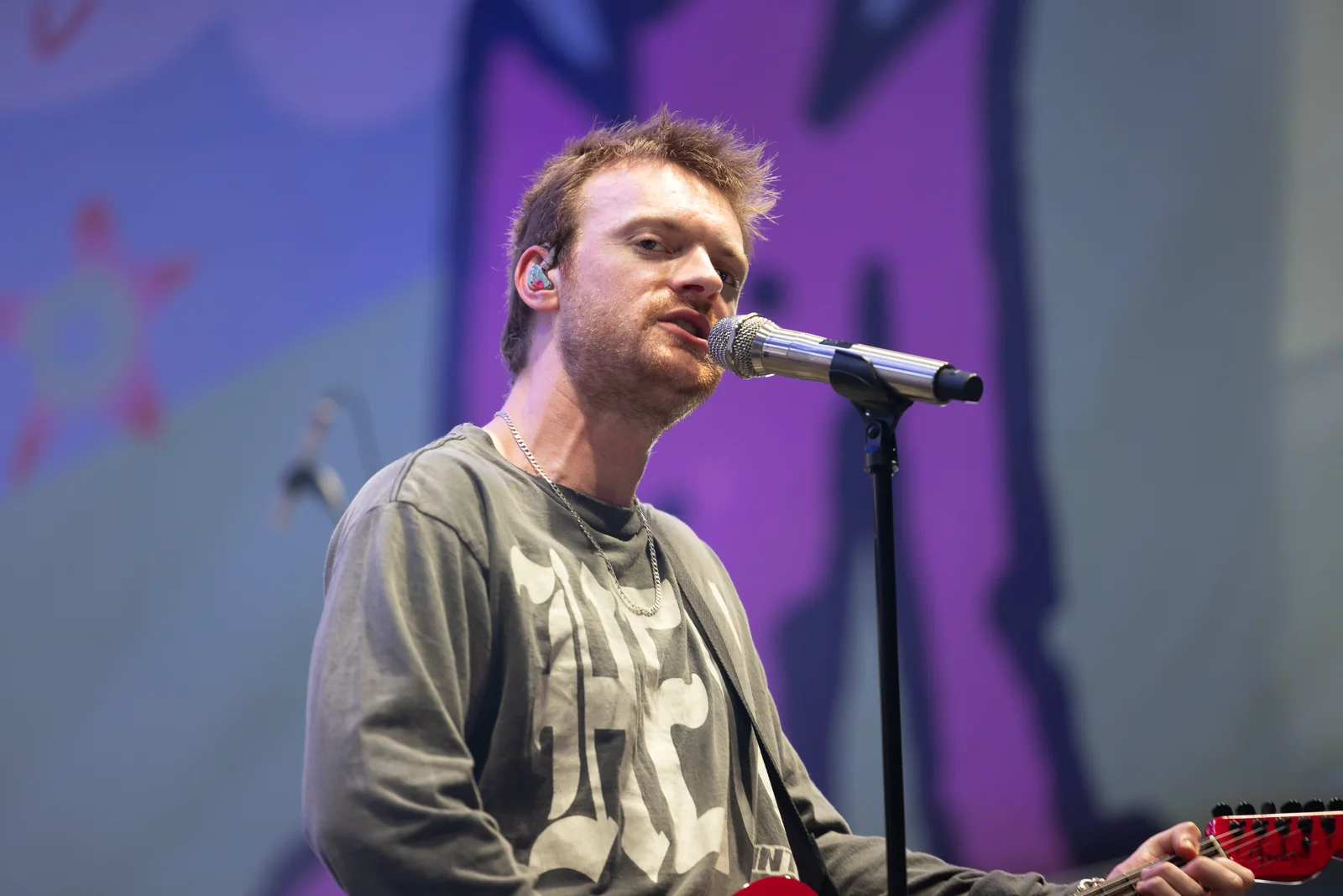
PHOTO: Bruce Baker / Wikimedia Commons · Resized and compressed for the web · CC BY 2.0
Sheeran can still take a stronger stand
Sheeran should learn from that example. Wanting a concert to feel welcoming does not resolve the question of whose concerns are allowed through the door. A promise of unity becomes difficult to defend if audiences see Palestinian advocacy treated as a threat to the evening.
He still has an opportunity to take a stronger public position. He can challenge Macklemore’s exclusion, defend the right to advocate for Palestinian lives and use his influence to press for a different outcome. His earlier response does not have to be his final one.
For now, Macklemore and the artists standing with him are showing the music industry the courage it needs. Ed Sheeran should be standing beside them.
Sources and further reading
Ed Sheeran: public response on Instagram ↗
FINNEAS: statement withdrawing from upcoming tour appearances ↗
Beoga: statement on solidarity and leaving the tour ↗
Reuters: Ed Sheeran’s explanation for Macklemore’s removal (September 15, 2026) ↗
ITV News: artist withdrawals and statements of solidarity (September 15–16, 2026) ↗
RTÉ: Aaron Rowe and Beoga’s statements (September 15, 2026) ↗
Photo: Selbymay / Wikimedia Commons / CC BY-SA 4.0 — original photograph ↗
Photo: Mark Kent / Wikimedia Commons / CC BY-SA 2.0 — original photograph ↗
Photo: Bruce Baker / Wikimedia Commons / CC BY 2.0 — original photograph ↗