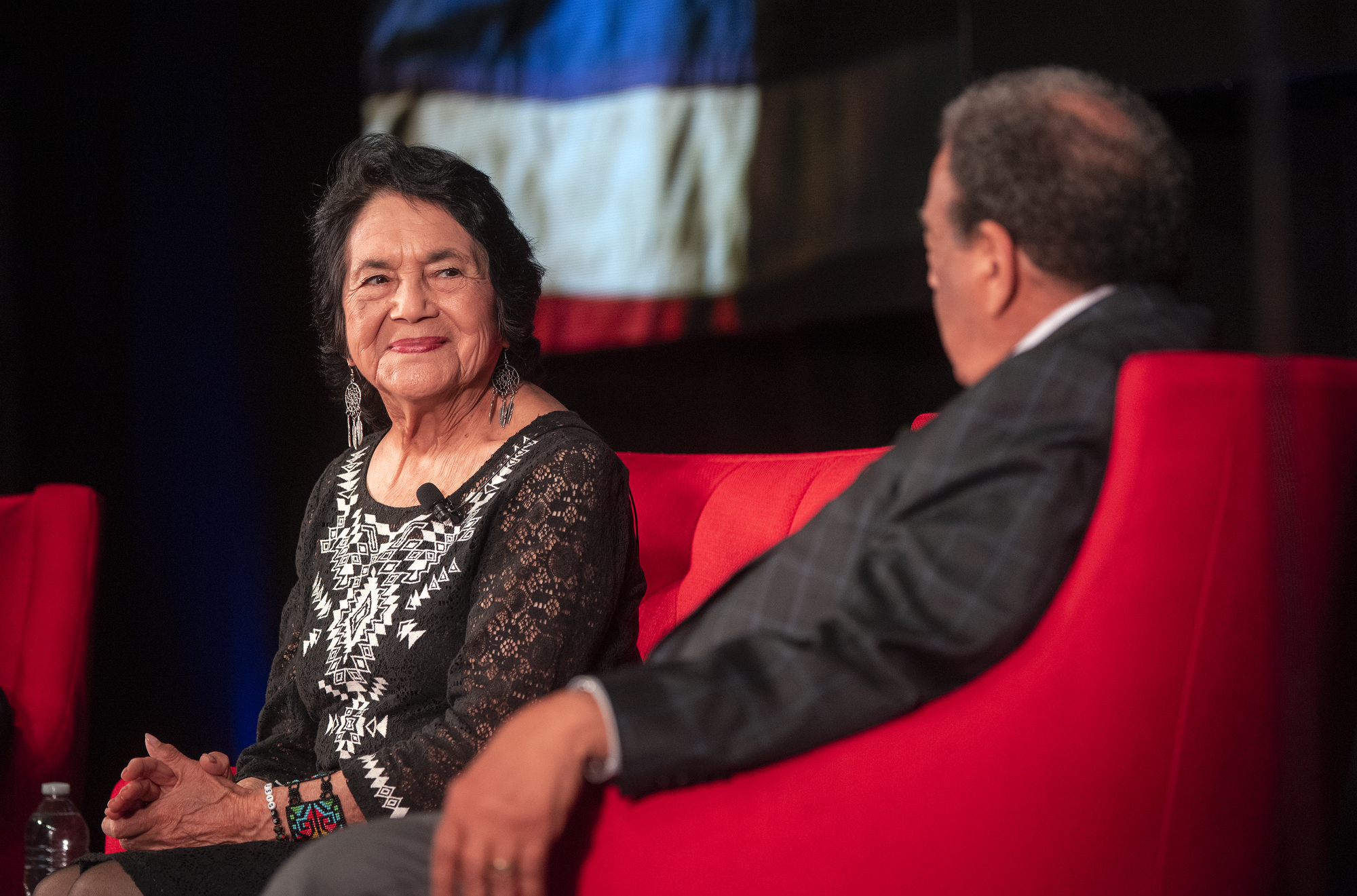
Dolores Huerta helped change who could exercise power in the United States. Through farmworker organizing, contract negotiations and campaigns for women’s equality, she helped Chicano and Chicana communities demand a stronger voice in their workplaces, neighborhoods and government.
Huerta died on October 28, 2026, at age 96, according to the Dolores Huerta Foundation. Her legacy reaches beyond the institutions she helped build to the generations who learned from her example that community organizing could produce lasting change.
From community organizing to national labor victories
That conviction developed partly through her work as a teacher in California. Seeing children arrive at school hungry and without adequate clothing persuaded her that helping students also required improving their families’ economic circumstances. She moved into organizing, working through the Community Service Organization on voter registration and neighborhood concerns.
In 1962, Huerta and César Chávez founded the National Farm Workers Association, a predecessor of the United Farm Workers. The organization gave agricultural workers a means to press collectively for better treatment rather than face employers individually.
Her work became an important part of the wider Chicano movement. That movement included many organizations and campaigns addressing education, discrimination, land rights and political representation. Huerta helped strengthen its labor dimension, connecting the demand for civil rights with the practical questions of wages, working conditions and the ability to support a family.
The Delano grape strike demonstrated the importance of solidarity across communities. Filipino farmworkers organized through the Agricultural Workers Organizing Committee began the strike in September 1965, with leaders including Larry Itliong and Ben Gines. Members of the National Farm Workers Association voted to join them. Recognizing that Filipino leadership is essential to understanding the movement Huerta helped build.
Huerta helped carry the struggle beyond California through the grape boycott. She directed organizing on the East Coast, working from New York to persuade consumers and businesses to stop purchasing grapes. She also served as a leading contract negotiator. The campaign’s major bargaining victories in 1970 showed how workers could combine organizing in the fields with pressure from consumers far away.
Those efforts made farmworker conditions a national concern. People who had never harvested grapes could participate through their purchasing decisions. For Chicano and Chicana organizers, the boycott offered a powerful example of how a local struggle could attract allies and influence decisions beyond its immediate community.
Huerta also helped advocate for California’s Agricultural Labor Relations Act of 1975. The law extended collective bargaining protections to agricultural workers, who had been excluded from the federal National Labor Relations Act, and established a state board to oversee union elections and address labor disputes. The achievement belonged to a broader movement, with Huerta playing an important organizing and legislative role.
Expanding Chicana leadership
Her significance for Chicanas was equally consequential. Women contributed throughout the Chicano movement, but leadership and public recognition often remained concentrated among men. Smithsonian educational materials identify Huerta as a figure who challenged expectations that limited women’s roles. Her presence at negotiating tables and in political campaigns demonstrated that a Chicana could help direct a movement.
Huerta’s feminism also developed through her relationships with other women organizers. During the New York boycott, she connected with Gloria Steinem and the women’s movement, strengthening her efforts to challenge gender discrimination within labor organizing. Later, she encouraged Latinas and other women to seek public office. Her work helped connect women’s equality with economic and political participation.
She also recognized that farmworkers did not all face the same dangers. Women working in agriculture faced particular risks of sexual violence, while children working alongside their parents needed protection. By bringing those concerns into organizing, Huerta helped broaden the discussion of what justice for a working family required.
Her best-known words captured the confidence behind that approach. In Arizona in 1972, Huerta coined “Sí, se puede,” commonly translated as “Yes, we can.” The phrase became a rallying cry for collective action. Its force came from the work behind it: recruiting people, sustaining campaigns and insisting that difficult conditions could be changed.
A legacy rooted in community power
In Kern County and the wider Central Valley, that organizing tradition continues through the Dolores Huerta Foundation. Its Vecinos Unidos program trains residents to identify local problems, develop campaigns and hold officials accountable. The foundation reports that participants have successfully advocated for improvements including parks, roads, sewer connections and educational equity.
The foundation’s education work also supports parents and young people in advocating for fair school budgets and addressing disparities in discipline. These efforts connect Huerta’s early concern for children’s circumstances with a continuing emphasis on giving families a voice in the institutions that shape their lives.
Huerta’s contribution to Chicano and Chicana history cannot be reduced to a famous slogan or a supporting role beside a male leader. She helped organize workers, negotiate agreements, influence legislation and expand opportunities for women to lead. Her legacy offers a practical understanding of community power: people build it by participating, working together and developing the confidence and skills to lead themselves.
Sources and further reading
Dolores Huerta Foundation statement ↗
Dolores Huerta Foundation biography ↗
National Park Service biography ↗
Julian Samora Research Institute, Michigan State University ↗
National Park Service, Workers United ↗
National Park Service, Dolores Huerta ↗
California Agricultural Labor Relations Board ↗
Smithsonian Folkways, ¡Yo soy Chicana! ↗
National Women’s History Museum ↗
Dolores Huerta Foundation FAQ ↗
Dolores Huerta Foundation, Vecinos Unidos ↗
Dolores Huerta Foundation, Education Equity ↗