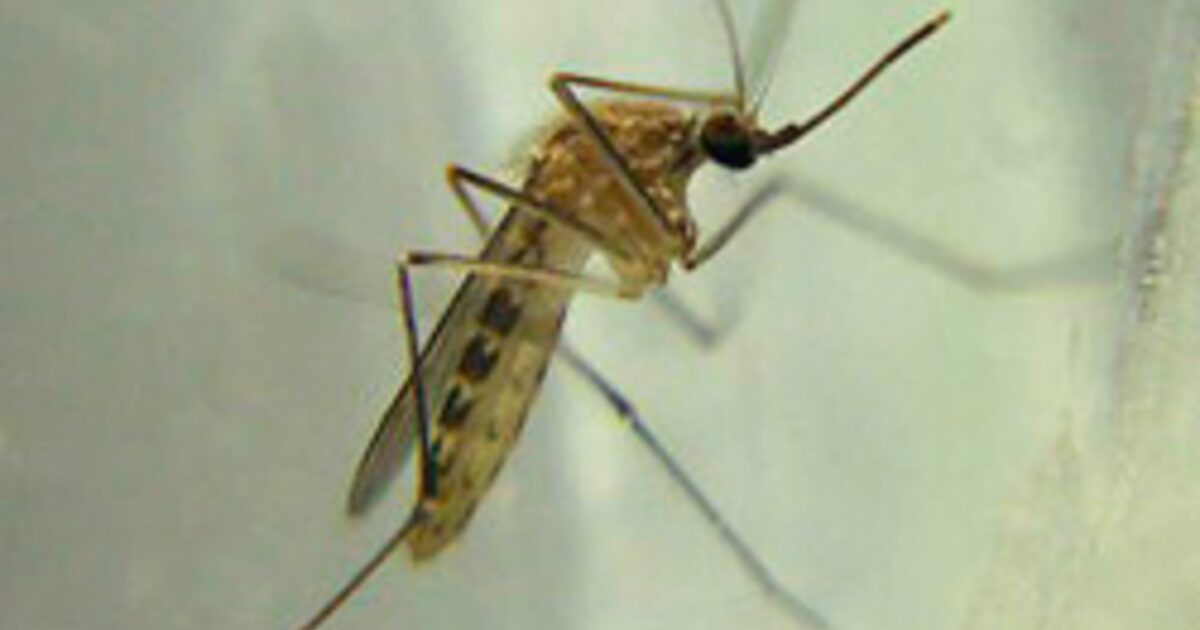
A mosquito pool tested positive in southwest Bakersfield

Kern County Public Health announced June 26 that a mosquito sample from the 93313 ZIP code tested positive for West Nile virus, the county's first confirmed detection in mosquitoes during 2026.

At the time of the advisory, the county reported no human cases. Testing a mosquito pool is a surveillance tool: it tells health officials that the virus is present in the local mosquito population and supports prevention work before or alongside human illness.

The location identifies where the positive sample was collected. It does not create a safety boundary around that ZIP code, and Public Health urged precautions throughout Kern County.

Read the source: Kern County Public Health: First positive mosquito sample of 2026

Most infections are mild, but severe disease can occur

West Nile virus spreads primarily through the bite of an infected mosquito. Many infected people have no symptoms, while some develop fever and other illness. A smaller group can experience serious neurologic disease, and rare cases are fatal.

A positive mosquito sample cannot reveal who has been bitten or diagnose a person. Anyone concerned about symptoms or individual medical risk should contact a healthcare professional rather than rely on neighborhood rumors or insect photographs.

Older adults and people with certain medical conditions can face greater risk of severe illness. Emergency symptoms such as confusion, severe weakness or neurologic changes require prompt medical evaluation.

Read the source: California West Nile Virus dashboard

Why the broader context matters

In Kern County, programs often work through overlapping networks of schools, public agencies, nonprofit organizations and volunteers. Understanding which institution actually operates a service matters because families can otherwise be sent to the wrong office, assume an opening is guaranteed or miss a deadline that applies only to a particular location.

The local significance is straightforward: Bakersfield and Kern County residents who spend time outdoors or maintain yards, pools and water containers are more likely to benefit when accurate information reaches them before arrangements need to be made. Transportation, work schedules, school calendars and eligibility can all affect whether a promising community opportunity becomes something a family can realistically use.

Community announcements should not be mistaken for independent evaluations. A county agency can reliably describe what it operates, where an event occurred and how residents can participate, but claims about long-term educational or economic outcomes require additional evidence before they can be presented as proven results.

Read the source: CDC: Prevent mosquito bites

Reducing breeding sites and bites

County guidance asks residents to empty standing water from flowerpots, birdbaths, pet bowls, fountains and small pools; scrub containers weekly; maintain swimming pools; and report significant infestations to the appropriate vector-control district.

Long sleeves, intact window screens and an EPA-registered insect repellent can reduce bites. Product labels matter because application instructions vary, especially for children.

Surveillance changes through the season. The California dashboard and Kern County notices are the best places to check whether later detections have altered the local picture.

The strongest available account comes from Kern County Public Health's June 26 advisory and federal mosquito-prevention guidance, which provides the clearest basis for checking the underlying facts against claims circulating elsewhere. Independent reporting and official guidance serve different purposes: one can document a developing dispute, while the other helps establish the governing requirements, current procedures and questions that still need an answer.

There are important limits to what can be established now. The sample confirmed virus in mosquitoes in the 93313 ZIP code; it did not by itself establish a human case, predict how many infections would occur or mean only that neighborhood was at risk. Treating an unresolved question as settled would give readers a certainty the available evidence does not support. New statements, updated documents or additional reporting could clarify the situation, but none should be presumed before they appear.

The next meaningful development to watch is updated county surveillance, any confirmed human or animal cases and notices from local mosquito and vector-control districts. Until then, people directly affected should rely on the institution responsible for the decision or service, check the dates attached to public guidance and be cautious about summaries that omit the legal, financial or local context.

Another useful distinction is the difference between an announcement and an outcome. Reporting on Kern County's first West Nile virus-positive mosquito sample of 2026 can establish what has been proposed, ordered, alleged or scheduled, but subsequent implementation may depend on separate decisions by Kern County Public Health's June 26 advisory and federal mosquito-prevention guidance. That is why readers should check whether an update describes a completed action, an ongoing process or a statement of intent.

People following this issue should also consider whom the information is meant to help. For Bakersfield and Kern County residents who spend time outdoors or maintain yards, pools and water containers, a clear explanation of dates, limitations and responsible institutions is more valuable than dramatic language unsupported by records. Responsible coverage should make those boundaries visible instead of presenting assumptions, online speculation or preliminary numbers as established conclusions.

The featured photograph is an authentic, credited documentary image selected for its relevance to the subject. It should be understood as visual context, not evidence that the photographer witnessed the specific announcement, court proceeding, community event or interaction described in this article unless the accompanying caption explicitly says so.

A careful timeline also matters. Developments concerning Kern County's first West Nile virus-positive mosquito sample of 2026 should be evaluated according to when a decision was made, when it was reported and whether anything changed afterward. Older background can remain useful, but it should never be presented as breaking news, and a future event should not be described as though it already occurred.

For Bakersfield and Kern County residents who spend time outdoors or maintain yards, pools and water containers, the most dependable response is to consult the original records before making assumptions or important decisions. Kern County Public Health's June 26 advisory and federal mosquito-prevention guidance helps establish what can presently be verified, while additional official notices may clarify deadlines, eligibility, procedural developments or other details that a brief social-media post can easily overlook.

Sources and further reading

Kern County Public Health: First positive mosquito sample of 2026

California West Nile Virus dashboard

CDC: Prevent mosquito bites