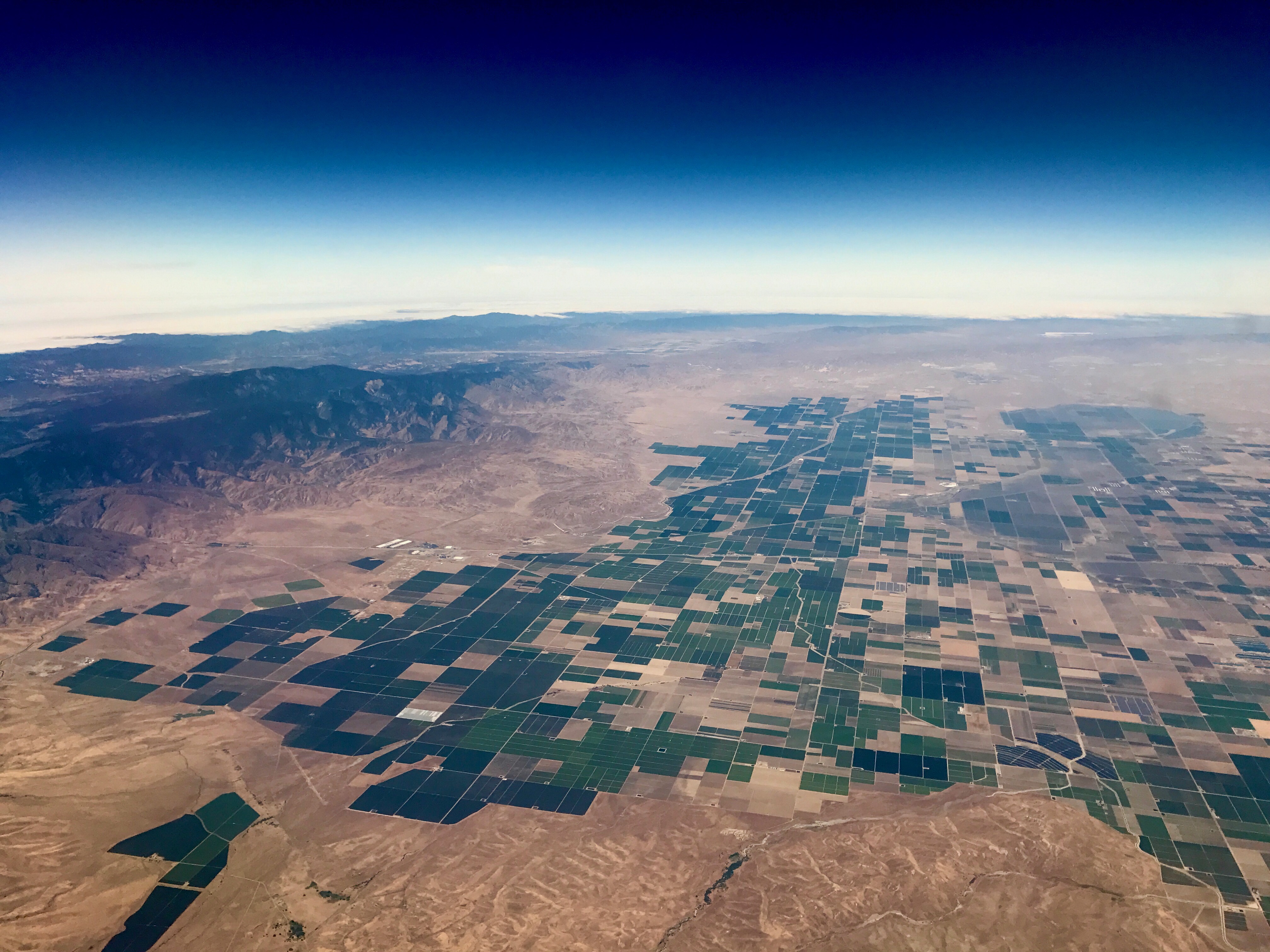
The first county-level numbers
California built its statewide pesticide-warning website after Kern County residents asked for advance notice about chemicals being applied nearby. The launch took place in Shafter. But the program’s first detailed county records reveal a question that a successful launch could not answer: how far were those warnings actually reaching?
For March 24 through December 31, 2025, the state’s SprayDays appendix lists 141 active subscribed location records in Kern County. During that period, it recorded 1,308 notices of intended restricted-pesticide applications from Kern and 541 email or text notifications associated with the county. These are historical figures from the program’s first nine months, not a count of enrollment today.
Our calculation puts Kern at approximately 3.3% of the 4,309 active subscribed location records statewide, but 0.56% of 95,969 delivered messages. Those percentages measure different things; neither is the share of Kern residents protected or exposed.
The counts do not establish that alerts failed to send. One intended application can generate many messages, and subscriptions depend on location. The records also do not mean exactly 141 people or households enrolled: location subscriptions can be duplicated across users. What the figures establish is a small documented subscription footprint, leaving the effectiveness of local outreach an unresolved accountability question.
Why the local stakes deserve attention
A separate state report finalized September 17, 2026, adds context. Its analysis of 2024 use ranked Kern third among counties for emission-adjusted use of the soil fumigant 1,3-dichloropropene, commonly called 1,3-D. The county figure was 407,851 adjusted total pounds. That is a regulatory calculation accounting for application conditions, not the physical pounds sprayed and not a count of people exposed.
The same report places Shafter highest among its six monitoring locations for the measured 2024 annual average of 1,3-D: 0.21 parts per billion. That remained below the 0.27 ppb monitoring threshold that triggers further evaluation. The report also incorporates corrections after laboratory analysis had underreported 1,3-D concentrations.
Those findings cannot demonstrate that anyone became ill, that a particular grower broke the law, or that today’s concentrations match 2024. They do show why counting website traffic alone would be an incomplete measure of whether this program is serving Kern.
The warning has limits
SprayDays is an advance-notice system, not a live measurement of the air outside a home or school. In its June 2026 explanation, the Department of Pesticide Regulation says it covers agricultural restricted materials because those pesticides have a consistent statewide advance-notice requirement. It does not cover every pesticide application.
The map identifies a one-square-mile section, rather than an exact field. DPR says that matches the standardized location information submitted through the permitting system and allows notices to reach the public promptly.
An application notice is also not confirmation that spraying happened. The current public map warns that an approved application may begin up to four days after its intended date, or may never happen. Weather, pest conditions and county approval can change the plan.
DPR’s June explanation says notices remain on the map for four days after the intended start. Official records of completed applications are held by county agricultural commissioners and later feed the state’s pesticide-use reporting. A family trying to reconstruct an event weeks later therefore needs a different record trail from the one used to receive an advance warning.
The state acknowledges barriers
DPR’s first annual review describes obstacles that matter in agricultural communities: internet limitations, language barriers and difficulty navigating digital forms. It says broad events and remote presentations did not consistently turn interest into participation, while hands-on help made registration easier.
The department also documented requests for more precise locations, clearer application timing and access to older notices. That is evidence that users themselves were asking for information beyond the original design. It is not evidence that the agency promised all those features or that every requested change is technically simple.
There have been improvements. In September 2025, DPR explained a map-based enrollment option designed to help residents whose rural or unincorporated addresses were not recognized. People could choose a section instead of relying on a street-address match.
In July 2026, DPR said the approved state budget continued funding for operations and outreach. It also reported that most commenters sought more precise location information. Its announced next progress-and-comment cycle is spring 2027, ahead of a final system review in 2028.
For Kern, the useful next test is concrete: whether enrollment grows around communities with substantial pesticide use, and whether residents can understand what a notice does—and does not—confirm. The early county totals cannot settle those questions. Publishing comparable local figures in the next review would make progress much easier to judge.
Reporting method: This is an independent review and comparison of published state records. It includes our percentage calculations, not new interviews or independent air sampling. Notification figures cover March–December 2025; the separate chemical-use and monitoring figures cover 2024.
Sources and further reading
DPR, SprayDays First Annual Status Update Appendix ↗
DPR, SprayDays First Annual Status Update ↗
DPR, SprayDays Six-Month Progress Update ↗
DPR, final 2024 1,3-D annual report release ↗
DPR, 1,3-Dichloropropene Final Report for 2024 ↗
DPR, Your Top SprayDays Questions, Answered ↗
SprayDays public pesticide map ↗