A compensation agreement without an agreed general raise
Kern County’s newly approved detention-officer agreement provides an estimated $150,000 in annual changes, including a higher uniform allowance and a floating personal holiday, but does not guarantee a new general salary increase. What’s the Scoop With Broach compared the staff summary with the actual salary, benefit and duration provisions of the 39-page packet.
Article V, Section 11 begins with a no-salary-adjustment statement for the agreement’s term, immediately followed by a commitment to reopen negotiations about a salary increase. The first meeting must occur no later than January 15, 2027. Any agreement takes effect upon adoption by supervisors. This is a dated bargaining obligation, not an already-approved percentage increase or an automatic January payday change.
The county-issued October 13 meeting recap confirms supervisors approved the memorandum with the Kern County Detention Officers’ Association, covering units T and V. The text identifies those units as detention deputies, senior detention deputies and detention sergeants. Its cost estimate should not be treated as a salary increase divided equally among all those employees.
The agreement’s July date does not fit its stated end date
The same salary section preserves a ten-step Base Cost of Living Adjustment schedule, with annual movement to the next step after July 1 until an employee reaches Step 10. It says this movement is not performance-based. That standing schedule is different from negotiating an additional across-the-board COLA, and the packet does not establish that every employee will receive an in-term step increase after this October approval.
Section 11(B) then describes negotiations for an additional COLA that could take effect July 1, 2027 during the agreement’s term. But Article XI ends the term June 30, 2027. July 1 is the next day. We preserve that inconsistency rather than silently correcting the contract, promising a July raise, or declaring the provision legally invalid.
The cover and staff letter describe July 1, 2026–June 30, 2027 coverage, while Article XI says the term runs from board approval through June 30, 2027 and conditions effectiveness on union ratification and board approval. These are the submitted document’s different formulations. The published board recap supplies the approval date, but is not a complete legal interpretation of every retroactive entitlement.
The identifiable benefit changes are not zero
The staff letter describes increasing the annual uniform allowance from $1,300 to $1,550. The $250 increase equals 19.2% of the prior allowance, not a 19.2% increase in salary. The agreement divides the annual allowance by 26.089 for biweekly payment and contains active-duty provisions; it is not a $1,550 payment every pay period.
The bilingual provision pays $35 per qualifying pay period for a designated verbal-bilingual position or $70 for a designated written-bilingual position. Eligibility involves assignment to a designated position, not merely speaking another language. The six listed languages are Spanish, Tagalog, Punjabi, Ilokano, Hindi and American Sign Language. The staff summary says five threshold languages were added; the final list should not be mistaken for six newly added languages.
The floating personal holiday has the value of the employee’s scheduled day and must be used in a workday increment within its assigned calendar year. It has no termination cash value and is excluded from overtime calculations. Other changes include shift bidding and adding an investigations-deputy classification to qualifying availability-pay assignments. These targeted changes explain why no guaranteed general raise does not mean no compensation or working-condition improvements.
What the cost estimate does—and does not—establish
Human Resources describes the county’s future fiscal landscape as uncertain and says the short term and salary reopener provide flexibility. It says some benefits align detention employees with benefits already provided to other non-safety bargaining units and expects the revisions to aid recruitment and retention. Those are the county’s stated rationale and expectations, not independent proof that staffing has improved.
The packet does not provide an employee-by-employee distribution of the approximately $150,000 annual impact, a cost breakdown for every benefit, or the outcome of future January bargaining. We therefore do not infer a per-officer windfall, a recruitment success rate or the eventual salary settlement.
Our original contribution is the clause-by-clause comparison of the staff’s compensation summary, the conditional reopener, the existing step schedule, the benefit arithmetic and the inconsistent July date. We re-read the official packet and the county’s approval recap on October 19, including the physical salary page. No union or county interview, payroll-file examination or legal ruling is claimed. The next concrete accountability milestone established by this text is whether the required January meeting occurs and whether supervisors adopt any resulting salary agreement.
Sources and further reading
County-issued October 13 meeting recap, item 44 PM approval ↗
Official October 13 afternoon agenda, item 44 ↗
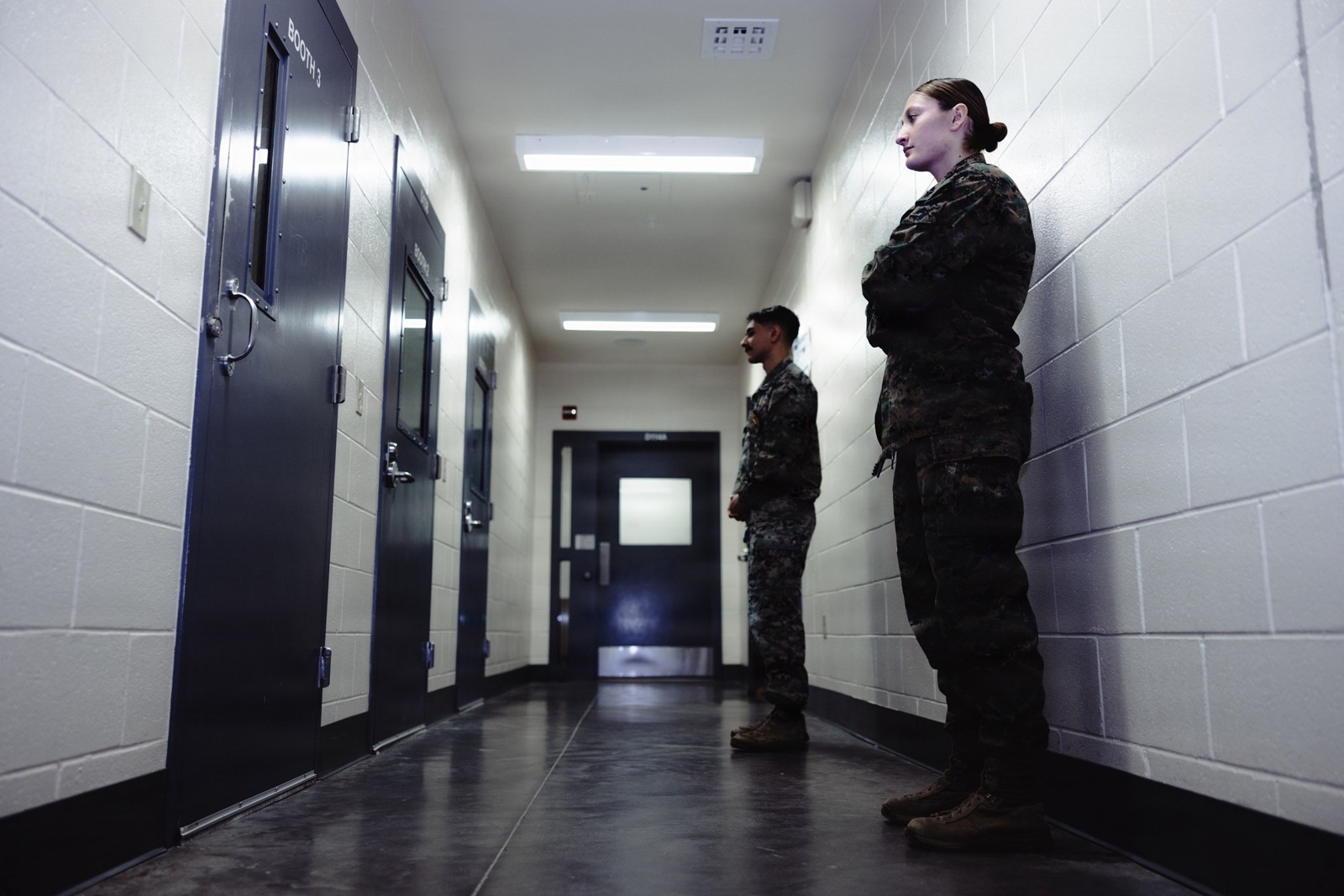
Photograph source and attribution: Cpl. Loriann Dauscher/U.S. Marine Corps ↗
Photograph reuse terms: Public domain — U.S. government work ↗