What the combined award actually purchases
Kern County’s $385,000 traffic-safety grant package assigns $352,925, or 91.7%, to personnel costs, including benefits. What’s the Scoop With Broach reconciled both detailed grant budgets against the October 13 staff request and found that this is principally a staffed education, inspection and outreach program. Its measurable commitments concern services delivered; its injury-reduction goals do not include a numerical reduction target.
That distinction defines the accountability question: how will the public distinguish a successfully delivered program from an improvement in traffic safety? Counting classes, seat checks and helmets can establish delivery. Those counts alone cannot establish how many collisions or injuries the program prevented. The submitted performance schedules require both activity reporting and statistical data, but do not identify a comparison or control for isolating the grants’ effect from other changes on the roads.
The county-issued October 13 meeting recap confirms supervisors approved the agreements, which cover October 1, 2026 through September 30, 2027. Public Health attributed the retroactive request to delays in receiving finalized state documentation. This analysis concerns the approved program’s submitted funding and performance terms, not a completed-year spending audit or a finding that a newly started program has failed.
Two grants, not one pedestrian-construction fund
The child-passenger agreement, OP27033, supplies $285,000, or 74.0% of the combined package. The pedestrian-and-bicycle agreement, PS27059, supplies $100,000, or 26.0%. Both use federal funds administered through the California Office of Traffic Safety. The combined $385,000 therefore should not be described as entirely new pedestrian-safety funding.
The pedestrian budget contains $92,269 in personnel and benefits, $1,000 for 50 bicycle helmets, $4,500 for pedestrian/bicycle safety items and $2,231 for educational materials. The child-passenger budget contains $260,656 in personnel and benefits, $10,000 for 100 child safety seats, $950 for certification fees, $13,000 for course instructors and $394 in indirect costs. The two budgets reconcile to $385,000. Neither includes a road-construction allocation.
Personnel is a budget category, not a synonym for administration or waste. The grant narratives assign health education assistants to hands-on instruction, safety events, walking activities, seat checks and distribution. They also assign office and grant-administration work. Claims are supposed to reflect actual allowable costs. This report has not examined time sheets or reimbursement claims and makes no allegation of improper billing.
The county’s accompanying $54,905 operating-budget appropriation is not a third grant to add to the $385,000. Staff says the child-passenger program was already included in the adopted budget and the pedestrian program is newly awarded. Its requested adjustment splits $54,905 between $13,000 in professional services and $41,905 in special departmental expenses. The staff letter does not provide a complete crosswalk from existing departmental appropriations to each line of the two grant budgets; the amendment amount cannot substitute for either award total.
A concrete service checklist, a broader safety goal
The pedestrian agreement commits to three community-engaged walk or bicycle audits at high-crash or near-miss locations, four safety presentations, two adult walking field trips, two youth walking field trips or on-foot training activities, and distribution of 50 grant-funded helmets. It also requires pre- and post-activity helmet-use surveys at the same location. Those surveys can measure an observed behavior at the selected site, rather than merely the number of events held.
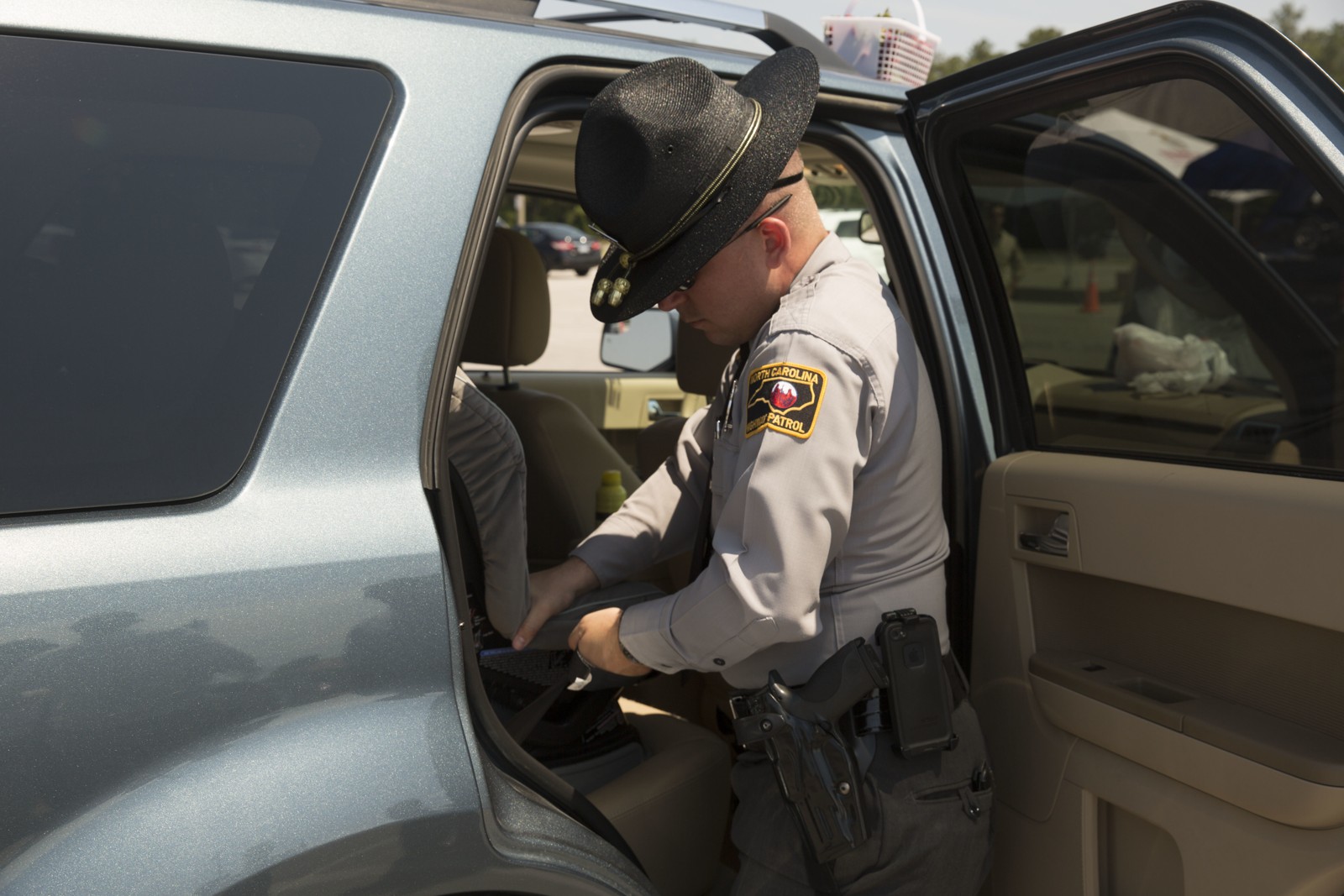
The child-passenger agreement sets targets including 200 individual seat checkups by appointment, 100 no-cost seat distributions, two technician-certification courses and 16 staff certifications, recertifications or renewals. One objective for participation in another agency’s checkup explicitly requires standardized collection of misuse data and records of corrections and installations. These requirements supply more useful evidence than a photograph of a distribution event.
Both agreements list reducing deaths and injuries among their goals, but the performance schedules do not specify a numerical crash or injury reduction to achieve during the grant year. Quarterly reports must include progress, statistical data, personnel status and explanations for unfinished objectives. The final evaluation is part of the fourth quarterly report. Fulfilling that reporting requirement is distinct from demonstrating that a citywide crash change was caused by this program.
The baseline needs its date limits attached
The pedestrian application lists 283 Bakersfield pedestrian crashes in 2023, 274 in 2024 and 188 in 2025. In its detailed problem statement, it qualifies the 2025 figures as running only through September 30. A simple comparison of 188 with a full prior year would therefore produce an invalid annual trend. Its child-passenger application separately uses 2025 crash figures through June 30. The two partial-year windows should not be merged into one annual baseline.
These are figures attributed to TIMS, SWITRS and other records within the county’s applications. This publication did not independently extract the underlying collision databases, and does not adopt the applications’ broader causal claims as independent findings. Our established contribution is the comparison of the staff request, two budget schedules, performance measures and evaluation provisions, re-read on October 17.
Public Health describes the program as a way to bring education and practical assistance to families and communities facing high traffic risk and limited access to safety resources. That service purpose is consistent with a personnel-heavy budget. Public evaluation should connect the funded staff time to delivered services and measured behavior, retain the crash data’s actual dates and distinguish wider injury trends from demonstrated program effects. No interviews, contact attempts or site visits by Billy Roach are claimed.
Sources and further reading
Official October 13 morning agenda, item 38 ↗
County-issued October 13 meeting recap; item 38 approval ↗
Photograph source and attribution: Cpl. Jackeline Perez Rivera / U.S. Marine Corps ↗
Photograph reuse terms: Public domain (U.S. federal government work) ↗