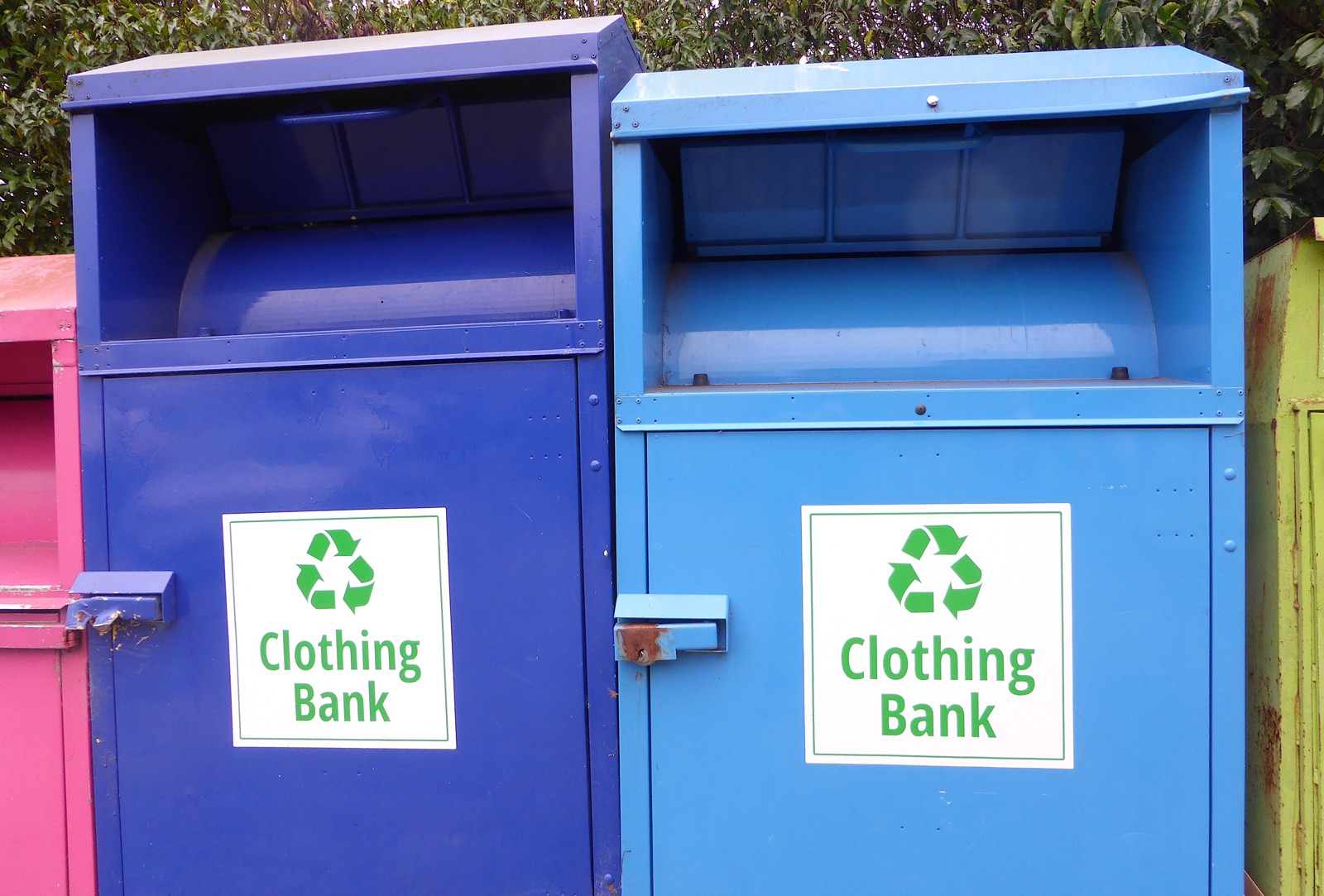
The measurements that would establish what happened to discarded clothes
Counting clothing delivered to collection bins would not, on its own, establish how much was repaired, reused or recycled. California’s new textile-stewardship system is supposed to report those downstream activities separately—and its current calendar shows that the fully implemented program is not expected until 2031.
What’s the Scoop With Broach compared Tables 16 through 19 of GAO’s October 16, 2026 textile circular-economy report with CalRecycle’s live implementation timeline, checked October 19. The original analysis tests a practical accountability question: which public measures will distinguish a functioning circular system from a growing collection system, and when should readers expect those measures? It does not evaluate the performance of a program that has not yet been fully implemented.
GAO’s legal comparison identifies California reporting requirements covering the weight of collected and reusable products, the weight handled by individual authorized sorters, repair businesses and recycling facilities, and the weight actually repaired and recycled. Those are different stages. A tonne accepted by a collection site cannot automatically be counted as a tonne recycled, and a transfer to a sorter is not itself evidence of a final reuse outcome.
Registration in 2026 does not mean full service in 2026
CalRecycle’s current schedule separates approval of the producer responsibility organization in March 2026; producers joining it by July 1, 2026; an initial needs assessment in March 2027; regulations taking effect no earlier than July 1, 2028; and an approved plan by July 2030, followed by full implementation in 2031. The agency identifies Landbell USA as the approved organization.
The registration deadline that passed this year is therefore not a deadline for a fully operating statewide collection and recycling network. GAO’s overview table describes California implementation as planned for 2030, but the state’s more detailed current calendar distinguishes the 2030 approved-plan stage from full implementation the following year. Reporting either date without its milestone would obscure what has actually been promised.
The needs assessment is another separate accountability point. It is intended to establish information about existing textile waste and infrastructure, not to certify that the future system has already diverted that waste. CalRecycle’s November 12 workshop agenda lists plan, contingency and annual-report concepts; an upcoming regulatory workshop is evidence of implementation work, not completed service delivery.
Collection access and downstream results need separate checks
The California collection provisions summarized in GAO’s Table 16 set geographically distributed minimums and free collection and transport requirements. The program must also develop a process to divert collected products to secondhand markets. Table 17 separately describes prioritizing reuse, including repair, and evaluating repair services in the needs assessment. These obligations show that collection is meant to be a pathway to further use, not the final performance measure.
The federal report’s comparison with the European Union is useful because its reporting categories explicitly include rates of recovery, reuse, preparation for reuse, recycling including fiber-to-fiber recycling, disposal, and exports of reusable textiles and textile waste. These are GAO’s findings from its review of the amended EU Waste Framework Directive, not this publication’s independent verification of every national implementation rule.
An export is also not automatically proof of recycling or of dumping. Its destination, classification and subsequent handling matter. GAO’s comparison notes that, with exceptions, separately collected EU textiles remain classified as waste until sorted and assessed as fit for reuse. This is why a collection total, an export total and a measured reuse or recycling outcome should not be merged into a single success figure.
The program has performance obligations, but outcomes are not yet established
California does not rely only on counting bins or announcing participation. GAO’s Table 19 says the organization’s plan must establish quantifiable annual and five-year performance standards unless or until CalRecycle publishes standards. Annual reports must analyze progress. The same table describes CalRecycle’s role in establishing, reviewing and adjusting standards and timelines after March 1, 2032. That later state role does not erase the earlier requirement for the plan’s own measurable standards.
The federal report also records important practical constraints: inconsistent fiber labels, limited infrastructure and uncertain markets for recovered material. Stakeholders said producers may hesitate to use recycled fiber when supply is inconsistent, while recyclers need reliable demand to sustain production. These are reported stakeholder observations, not measured proof that California’s program will fail.
GAO did not assess the listed policy options for feasibility, legality or effectiveness and did not quantify nationwide benefits. Its 49 selected stakeholder interviews are not a representative survey of the industry. State, EPA and Federal Trade Commission reviewers provided technical comments incorporated into the report. The present investigation involved no interviews or inspection of private collection facilities.
The evidence supports a specific future reporting test, not a present accusation: distinguish registration from operation, collection from final disposition, and required reporting from verified outcomes. California’s staged calendar and the separate material-flow categories make those distinctions visible now, before a future tonnage announcement is mistaken for proof that discarded clothing stayed out of the waste stream.
Sources and further reading
GAO — Textile Circular Economy publication and study description ↗
Photograph source and attribution: Digitura/Wikimedia Commons ↗