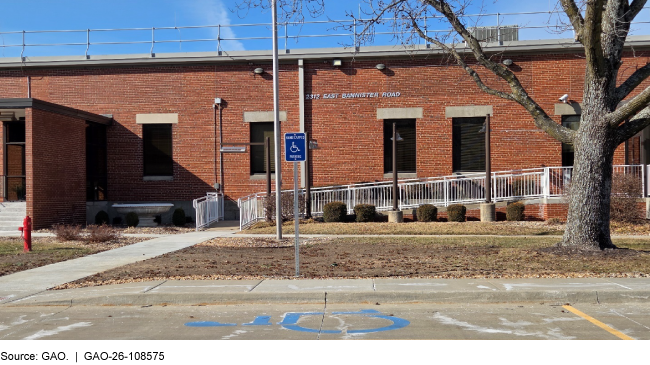
A complaint-driven system received fewer than one case a month
The U.S. Access Board received 41 Architectural Barriers Act complaints involving General Services Administration office buildings from October 2022 through June 2026. That is about 0.91 complaints per month across a GSA portfolio of more than 6,000 owned or leased office buildings.
The Board closed 25 complaints and still had 16 in process, meaning 39.0% remained open at the cutoff. GAO did not say all open cases were overdue or substantiated, so the percentage measures status—not wrongdoing.
| Measure | Count | Share |
|---|---|---|
| Complaints received | 41 | 100% |
| Closed | 25 | 61.0% |
| Still in process | 16 | 39.0% |
| Average per month | 0.91 | 45-month period |
The enforcement model depended on a process GSA did not advertise
Access Board officials told GAO they generally rely on complaints rather than inspections because of resource constraints. Yet almost all industry groups, federal employee unions and disability advocates GAO interviewed said the public was generally unaware it could file a complaint.
Some stakeholders familiar with the process said it worked effectively. The gap was therefore not evidence that the mechanism never resolves barriers; it was that GSA had not made the mechanism visible to the people expected to trigger it.
Design review is not the same as continuous inspection
GSA said it reviews construction, alteration and leasing projects for compliance with its accessibility standard. Complaint enforcement addresses barriers that remain or emerge, but GAO’s review did not produce a statistically representative defect rate for federal buildings.
GAO visited six buildings selected for open or closed complaints and interviewed nine stakeholder groups. Those choices provided detailed evidence but cannot support a claim that 41 complaints capture the full prevalence of inaccessible conditions.
Recommendation and original contribution
GAO recommended that GSA publicize the complaint process, including possible signs at building entrances. GSA agreed; the recommendation remained open on the report page.
This newsroom analysis adds the rate and status comparison: fewer than one complaint a month reached an enforcement system covering thousands of buildings, while public awareness was itself the identified weakness. That does not prove underreporting, but it shows why complaint counts alone cannot be treated as a clean measure of accessibility.