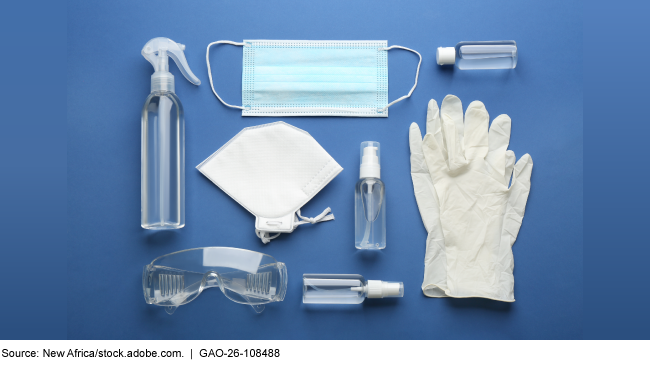
The airlift record is large; the interview sample is limited
From March through June 2020, FEMA funded 437 Project Airbridge flights that moved about 1.2 billion PPE items, primarily gloves, masks and gowns. That averages roughly 2.75 million items per flight, though cargo mix and load size varied.
FAA also allowed certain passenger carriers to transport cargo in cabins. Ports and shippers used methods such as ‘peel piles’ to pre-sort priority containers.
GAO interviewed 21 transportation, health-distribution and port stakeholders. Many said a larger federal role was unnecessary or could create new delays, but GAO explicitly describes the sample as nongeneralizable.
| Measure | Value |
|---|---|
| Federally funded flights | 437 |
| PPE items transported | About 1.2 billion |
| Average items per flight, calculated | About 2.75 million |
| Selected stakeholders interviewed | 21 |
A retrospective, not a readiness test
The report documents what happened during the pandemic and stakeholder views; it does not audit a current emergency logistics plan or recommend a new one. Nor does the average items-per-flight calculation measure weight, value or delivery speed.
The accountability question left open is whether agencies preserved the operational lessons, authorities and data needed for another shortage while avoiding interventions that could congest ports or distort private logistics.
Sources and further reading
GAO-26-108488, COVID-19 PPE Transportation, September 14, 2026 ↗