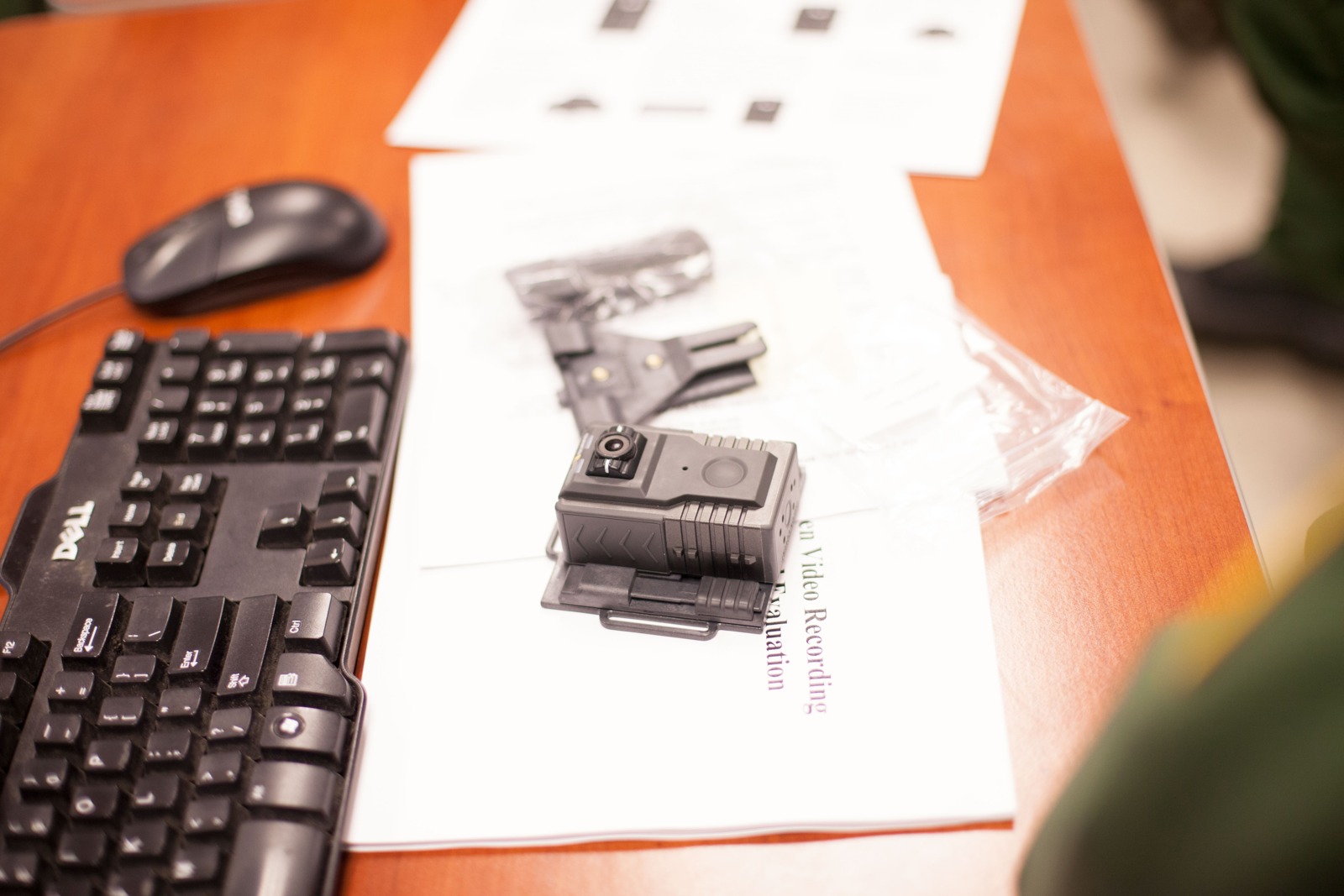
A successful storage check begins after a recording exists
Customs and Border Protection reported that more than 99% of videos in its body-camera storage system were categorized in a March 2026 dashboard. That is evidence about the handling of existing files—not evidence that 99% of encounters requiring a camera were recorded.
What’s the Scoop With Broach compared the recording, upload and retention controls in GAO’s September 15 audit with DHS’s August 28 written response, including the scanned response pages reproduced in Appendix I. The audit was publicly released October 14. This cross-stage and repair-calendar analysis establishes why equipment distribution and well-categorized video files cannot independently establish recording coverage or the programs’ public-accountability results.
GAO also cited an ICE dashboard showing more than 91% of stored footage categorized in January 2026. The dates differ, so the two figures are not a matched-period agency league table. More fundamentally, both concern footage already present in the retention system. An encounter never recorded cannot appear in that denominator.
There are real safeguards—but they cannot recover a missing recording
The audit describes monthly supervisory reviews, reviews of footage associated with serious incidents, central checks for uncategorized videos and controls retaining original uploaded footage separately from redacted versions. Correct categories matter: evidentiary footage has much longer retention requirements than nonevidentiary recordings. GAO found both components generally met their footage-retention categorization requirements.
But the report identifies a separate problem at the start of the process. ICE lacked additional controls to provide reliable assurance that cameras were activated when required. Some case-management systems did not fully interface with video storage, making it difficult to check for a corresponding recording in every case. Officials also described the practical limits of manually checking large numbers of encounters.
CBP already used some automatic-activation controls, including triggers involving emergency lights or a drawn firearm. ICE relied on supervisory oversight, expectations communicated to personnel, reporting failures to activate, and reviews of use-of-force incidents. The comparison does not establish that ICE recorded nothing or that CBP recorded everything. It identifies a control gap different from the largely successful checks on files that were uploaded.
Equipment reached all ICE field offices; guidance repairs extend beyond that milestone
DHS’s written response provides an important update beyond the audit’s spring deployment counts. The department said all ICE field offices had received body-camera equipment as of August 5, 2026, ahead of its August 31 goal, and that agents and officers were being trained for implementation. Delivery to every field office does not mean every employee had a camera, completed training or recorded every required encounter.
The response’s repair dates make that distinction concrete. CBP estimated March 31, 2027 for updated program planning and operational guidance. ICE estimated December 31, 2026 for updated program plans and June 30, 2027 for Homeland Security Investigations’ camera handbook. For results-oriented performance goals and measures, CBP estimated July 30, 2027 and ICE February 26, 2027.
Those are agency commitments, not independently verified completion dates. All seven audit recommendations remained open on GAO’s public page checked October 19. The timing shows that distributing equipment and completing the management framework are distinct milestones; the department’s own response places several framework repairs months after its stated equipment-delivery milestone.
The audit also distinguishes offices. ICE Enforcement and Removal Operations and its Office of Professional Responsibility already had operationally specific handbooks. Homeland Security Investigations had not finalized one. None of CBP’s four relevant offices had the operationally specific guidance GAO considered necessary, even though three had general internal operating procedures. Describing all of ICE as having no instructions would erase that counterevidence.
The disputed activation fix involves privacy as well as transparency
DHS accepted six recommendations but rejected the recommendation for additional ICE activation controls, such as automatic activation. Its response argued that existing management and supervision were sufficient and that unintended triggers could record sensitive interactions with informants, victims or people exercising First Amendment rights in places where recording is restricted. It asked GAO to close that recommendation.
GAO did not accept that request. It argued that DHS had not addressed settings where automatic activation could be effective or identified other controls that would reliably ensure activation when policy requires it. The recommendation is for additional controls, with automation as an example—not a finding that all encounters must be recorded without privacy exceptions.
The audit’s field observations cannot establish a national violation rate. Its ten locations were selected to provide varied perspectives, not a representative statistical sample. Personnel in six locations expressed uncertainty about when to activate cameras; officials at all ten said training prepared them to use the equipment. Those statements can coexist because basic equipment training and resolving operation-specific policy questions are different tasks.
This publication reviewed the federal documents and recalculated no encounter-compliance rate because the necessary denominator was not provided. It did not inspect restricted video, interview agents or investigate a particular use-of-force incident. The supported accountability finding is narrower and testable: the government can show that most stored videos were categorized while still lacking the controls and results measures needed to establish how consistently required encounters were captured.
Sources and further reading
GAO — CBP/ICE camera program report and seven current recommendations, checked October 19, 2026 ↗
GAO — accessible full body-camera audit ↗
Photograph source and attribution: U.S. Customs and Border Protection ↗
Photograph reuse terms: Public domain — U.S. government work ↗