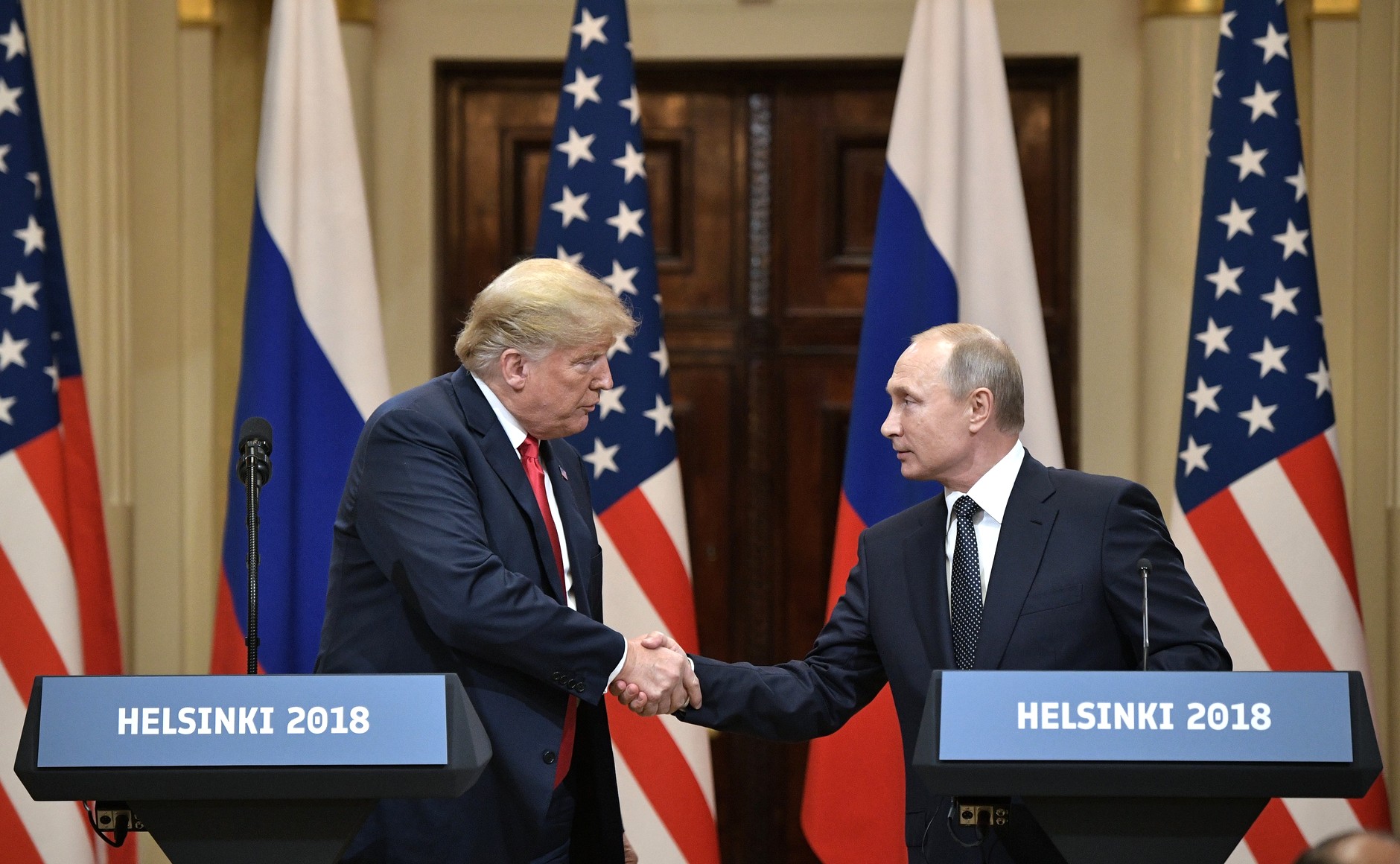
America is turning its foreign policy upside down
For generations, the United States built its global influence by standing beside democratic allies. Canada, the United Kingdom, France, Germany and other NATO nations were not always easy partners, but they shared our basic commitment to elections, individual liberty and the rule of law.
Donald Trump appears determined to turn that tradition upside down.
Again and again, Trump has treated democratic allies as adversaries to be threatened, humiliated or economically punished. At the same time, he has repeatedly expressed admiration for authoritarian leaders who suppress political opposition, control the press and rule without meaningful democratic accountability.
That contrast is not merely an unusual diplomatic style. It represents a dangerous shift in what America appears to value and whom the world can trust.
Trump appears drawn to leaders with fewer restraints
Trump has spoken warmly about Russian President Vladimir Putin, North Korean leader Kim Jong Un, Chinese President Xi Jinping and Hungarian Prime Minister Viktor Orbán. Although these leaders govern very different countries, they share a defining characteristic. Power is heavily concentrated at the top, with far fewer restraints than an American president faces.
Trump frequently seems impressed by that kind of control.
Democratic leaders, by comparison, must answer to legislatures, courts, voters, journalists and political opposition. They cannot simply deliver whatever Trump demands. When they disagree with him, he often describes them as weak, unfair or disrespectful.
That may help explain the apparent contradiction in his foreign policy. Authoritarian leaders can flatter Trump personally and stage elaborate displays of power. Democratic allies are more likely to challenge him, negotiate aggressively and defend their own national interests.
Trump appears to mistake flattery for friendship and disagreement for betrayal.
Canada shows the cost of treating allies like enemies
Canada offers one of the clearest examples. The United States and Canada have maintained one of the closest economic and security relationships in the world. Our industries, energy systems and communities are deeply connected. Yet Trump has repeatedly targeted Canada with tariffs and threats instead of treating it as a valued partner.
His administration argues that such tariffs defend American workers and respond to unfair trade practices. But economic warfare against a longtime democratic ally does not occur in isolation. Canada retaliates, businesses face uncertainty, supply chains are disrupted and consumers on both sides of the border can ultimately pay more.
The dispute escalated again in August 2026, when Trump threatened 50 percent tariffs on Canadian vehicles, auto parts and steel following the collapse of trade negotiations. Canadian officials responded by preparing retaliatory tariffs, placing a historically close relationship under even greater strain.
Weakening NATO does not make America stronger
Trump has applied similar pressure to Europe and NATO. It is reasonable to demand that allies contribute more to their own defense. Previous presidents made that argument too. But there is a difference between negotiating with allies and constantly threatening the alliances that have helped protect American security for decades.
NATO is not a charity project. It gives the United States military cooperation, intelligence sharing, overseas access and partners who are obligated to treat an attack against one member as an attack against all. After September 11, NATO invoked its collective defense provision for the first and only time in support of the United States.
Weakening confidence in that alliance does not make America stronger. It creates uncertainty that Russia and other adversaries can exploit.
The same troubling pattern has appeared in Trump’s handling of Ukraine. He has often directed more public anger toward Ukraine and America’s European partners than toward Putin, the authoritarian leader whose government launched the full scale invasion. Trump presents his approach as dealmaking, but peace achieved by pressuring the invaded democracy more heavily than the invading power risks rewarding aggression.
Diplomacy is necessary, but admiration is not
There is an important distinction here. American presidents must communicate with hostile and authoritarian governments. Diplomacy sometimes requires sitting across from reprehensible leaders. Talking to Putin, Xi or Kim is not automatically wrong.
The problem is not communication. It is admiration without accountability.
When an American president repeatedly praises authoritarian strength while ridiculing democratic constraints, he sends a message that power matters more than principle. When he threatens allies while offering personal warmth to dictators, he teaches the world that decades of loyalty may matter less than one leader’s willingness to flatter him.
This approach may also reflect Trump’s transactional view of relationships. He frequently describes alliances in terms of immediate payments, trade balances and personal loyalty. But strong international partnerships are built over decades. Their value cannot always be reduced to a single invoice or quarterly trade figure.
The safeguards of democracy are strengths
Democracies can be frustrating partners precisely because they are democracies. They debate. They disagree. Their citizens protest. Their journalists investigate. Their courts interfere. Their leaders change.
Those are not weaknesses. They are the safeguards separating democratic government from authoritarian rule.
The United States should not abandon its national interests or agree with allies on every issue. It should demand fair trade, adequate defense contributions and responsible cooperation. But those disagreements should be handled with the understanding that democratic allies remain essential to America’s economic and national security.
Authoritarian leaders do not become trustworthy because they compliment an American president. They act in their own interests, and many of those interests directly conflict with ours.
America risks losing something it cannot easily rebuild
Trump’s hostility toward democratic partners and fascination with strongman leaders risks leaving America increasingly isolated, feared by its friends, manipulated by its adversaries and less trusted around the world.
America became powerful not simply because other countries feared it, but because many believed they could rely on it. If Trump continues treating allies as enemies and dictators as friends, that trust may be the most valuable thing he destroys.
The views expressed in this column are those of the author and are presented as opinion.
Sources and further reading
Reuters: Trump threatens 50 percent tariffs on Canadian vehicles and parts ↗
White House: Additional tariffs imposed on certain Canadian goods ↗
Freedom House: The defense of the international democratic order weakened in 2025 ↗
Carnegie Europe: Trump turns NATO into a tool of coercion ↗
Reuters: Orbán anticipated a new era in relations with Trump ↗