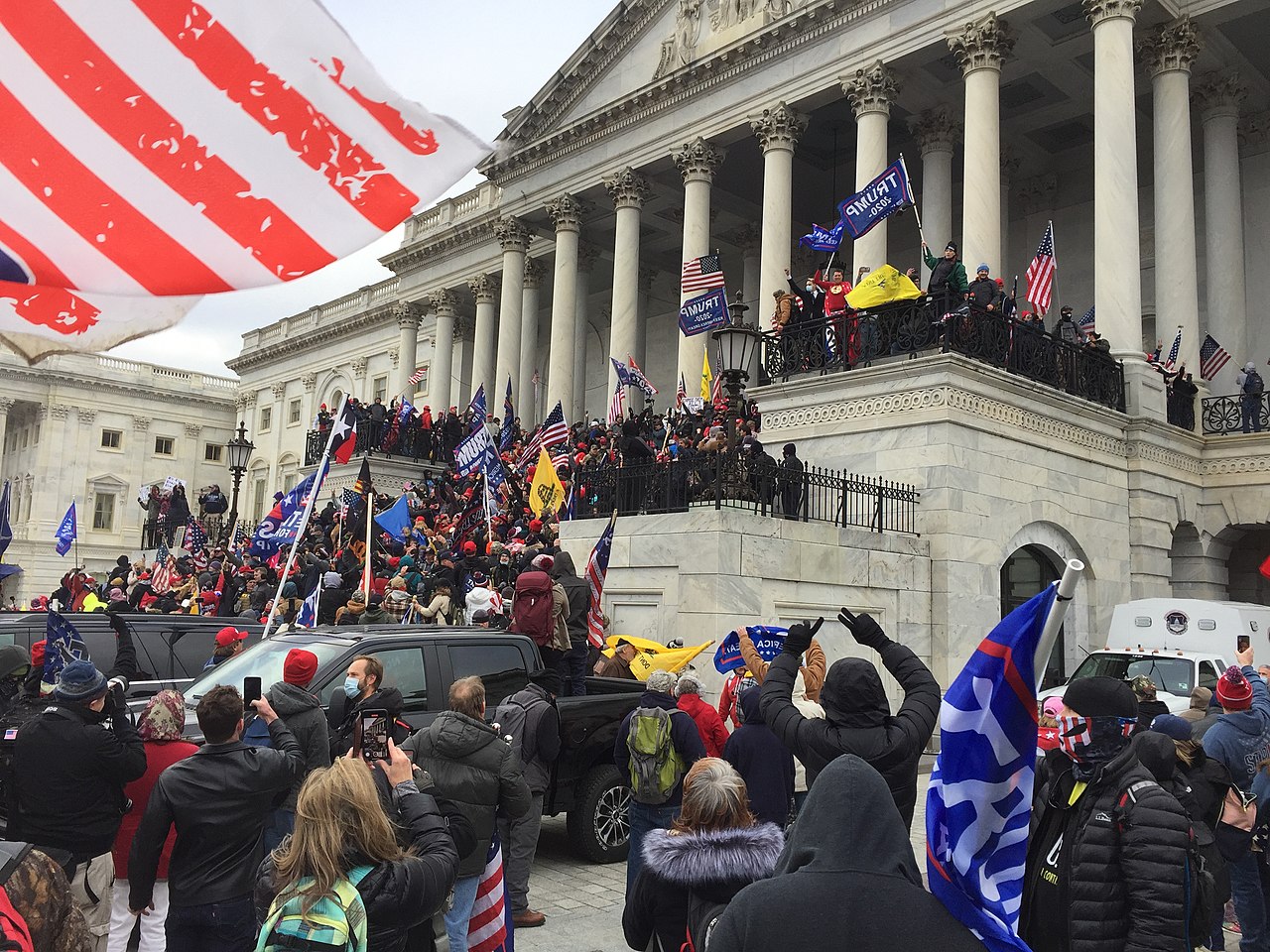
January 6 Showed What MAGA Is Capable Of
On January 6, 2021, MAGA supporters stormed the United States Capitol, attacked police officers, smashed windows, forced their way into restricted areas, and attempted to stop the certification of a presidential election. The country watched as a movement built around Donald Trump turned its anger toward the very institution responsible for confirming the will of American voters.
That was not a routine political protest. It was a violent assault on the Capitol involving people united by MAGA imagery, MAGA slogans, and the belief that their preferred political leader should remain in power despite losing the election. When people organize around a shared identity and use intimidation or violence to advance their objectives, Americans should be allowed to ask an obvious question.
Why has the FBI not classified MAGA as a loosely organized gang?
The Justice Department has documented how members of groups involved in January 6 communicated, organized, and worked together as the attack unfolded. Federal prosecutors brought serious cases against individuals connected to the violence. Yet the larger MAGA movement that supplied the identity, the pressure, and the political purpose behind that day continues to receive language and treatment that often make it sound less dangerous than its actions suggest.
January 6 should have permanently ended the idea that MAGA is harmless whenever its most aggressive supporters are acting as a crowd. A crowd does not stop being dangerous simply because it waves political flags.
MAGA Does Not Need Formal Membership to Operate Like a Gang
A loosely organized gang does not need membership cards, official dues, or one national headquarters. What matters is whether people share an identity, recognize common symbols, communicate across a network, and repeatedly act in ways that support intimidation, threats, or criminal conduct.
MAGA has recognizable symbols, coordinated messages, online networks, influential personalities, and a culture of loyalty centered on Donald Trump. Supporters can identify each other immediately through hats, flags, slogans, rallies, and social media. That shared identity can turn individual anger into collective pressure almost overnight.
When election officials, judges, public servants, journalists, or ordinary citizens face harassment after being singled out by prominent figures or viral posts, the result is not always random. Networks of supporters can repeat the same accusations, circulate personal information, flood people with threats, and make targets fear for their safety.
Not every person who votes Republican or supports Trump participates in criminal activity. Peaceful political speech is protected. But constitutional protections should not become an excuse to ignore coordinated threats, attacks, harassment, and intimidation when those actions are carried out under the MAGA banner.
The question is not whether every MAGA supporter is a criminal. The question is why violent or threatening MAGA networks are not examined with the same seriousness given to other loosely organized groups whose members use fear and force to advance a shared agenda.
MAGA Uses Intimidation to Influence Public Life
The danger of MAGA does not begin and end with the people who physically entered the Capitol on January 6. Political intimidation also works when election workers fear showing up for their jobs, public officials need extra security, and people worry that speaking out will bring harassment to their families.
A movement does not need to issue a written order for supporters to understand who has been identified as an enemy. Once a public figure, government employee, journalist, or judge is portrayed as a traitor, a swarm of angry followers can respond in ways that silence criticism and punish disagreement.
That atmosphere damages democracy because citizens and public servants should not have to choose between doing their jobs and protecting their personal safety. When fear becomes a political tool, the country has a responsibility to confront the organized behavior that makes that fear effective.
Too often, MAGA intimidation is described as heated rhetoric or political passion. But language should not disguise what happens when coordinated hostility encourages threats or violence. If another group used the same methods, the public would immediately demand a stronger law enforcement response.
Why Does MAGA Get a Different Standard?
If a loosely connected group gathered around shared symbols, communicated through social media, targeted perceived enemies, threatened public officials, and participated in a violent attack on the Capitol, most Americans would expect the FBI to investigate it as a serious organized threat.
MAGA should not receive special protection from scrutiny simply because it calls itself a political movement or because powerful politicians benefit from its support. A political label does not erase assaults, threats, conspiracies, or efforts to intimidate the people responsible for carrying out democratic elections.
Communities across the country know that law enforcement agencies have historically treated loosely connected groups as dangerous based on common symbols, networks, repeated criminal conduct, and patterns of intimidation. It is fair to ask why those standards appear to change when the group in question wraps itself in patriotism and political influence.
January 6 was the clearest possible warning. A movement that could help produce an attack on the seat of American government deserves more than polite descriptions and endless excuses. It deserves serious scrutiny based on what its most dangerous networks have actually done.
The FBI Should Investigate MAGA as an Organized Threat
The FBI should examine violent MAGA networks with the same tools and urgency it applies to other groups connected to threats, intimidation, coordinated attacks, and criminal conspiracies. Investigations should follow evidence, protect constitutional rights, and focus on people who engage in or organize unlawful conduct.
Supporting a candidate is not a crime. Attending a peaceful rally is not a crime. Wearing a political hat is not a crime. But assaulting officers, threatening election workers, coordinating violence, or attempting to interfere with government through force are entirely different matters.
MAGA cannot be allowed to hide behind the language of politics whenever its supporters cross the line into intimidation and violence. The public has every right to demand that law enforcement take the movement's dangerous networks seriously, especially after the attack on January 6 showed the country exactly what can happen when that threat is underestimated.
If the FBI can recognize loosely organized gangs in other settings, then Americans deserve an honest answer about why violent MAGA networks have not faced the same classification or the same level of scrutiny.
After January 6, pretending MAGA poses no organized threat is not neutrality. It is a refusal to confront what the country has already witnessed.
Sources and further reading
U.S. Department of Justice: Proud Boys prosecution and the January 6 Capitol attack ↗
FBI: How federal investigators describe criminal gangs ↗
FBI: Testimony on political violence and constitutionally protected activity ↗
Wikimedia Commons: January 6 Capitol attack photograph by TapTheForwardAssist ↗
Creative Commons: Attribution ShareAlike 4.0 license for the cropped featured photograph ↗