Four requests draw on one postponed project
Four landfill funding requests in Kern County’s October 13 board packet look separate on the agenda. Matching their attached Workday project entries shows that all four would draw from the same delayed Shafter-Wasco landfill expansion. Together they propose shifting $1,263,000—28.1% of the $4.5 million Module 4 budget—to groundwater monitoring, perimeter gas monitoring and gas extraction at other or existing landfill areas.
What’s the Scoop With Broach traced each proposed debit to its paired credit against Module 4 project 250506PRJ. The total counts each transfer once: $290,000 for McFarland-Delano, $320,000 for Bena, $350,000 for Mojave-Rosamond and $303,000 for Shafter-Wasco gas work. Adding both sides of the accounting entries would wrongly double the movement to $2.526 million.
The accountability question is what the delay frees money to fix. The narrative letters say Module 4 will not use its full allocation in fiscal 2026–27 because that project has been delayed to 2027–28. Three monitoring projects had previously been approved in the prior fiscal year but did not commence then. The records identify an overdue delivery problem and specific compliance needs; they do not establish that the transfers have purchased finished, operating systems.
Two groundwater systems need different repairs
At McFarland-Delano, Public Works says a 2024 WSP evaluation found the corrective-action monitoring program inadequate and determined that two additional groundwater wells were needed to meet Title 27 requirements. The proposed wells are MD3-09 and MD3-10. The October 2026 request thus ties current funding to a coverage deficiency identified in 2024, rather than presenting it solely as a new expansion expense.
At Bena, the department identifies a different mechanism: the groundwater level fell below what made monitoring well BE1-20 viable. Its letter expressly says this put the monitoring network out of compliance. It proposes abandoning that well and installing a deeper replacement to reach current groundwater levels. The report attributes that compliance assessment to Public Works; it is not a new independent violation determination by this publication.
Neither letter supplies sampling results establishing a new contaminant plume or drinking-water exposure. An inadequate or unusable monitoring point creates a gap in observation; it cannot, by itself, tell readers that nearby households were harmed or that no contamination exists. The two groundwater requests together total $610,000, about 48.3% of the four proposed transfers.
Gas monitoring is not gas extraction
The Mojave-Rosamond narrative describes subsurface gas probes around the Phase 2 expansion area, no more than 1,000 feet apart. Public Works says the network must be in place before that phase accepts waste. This is a monitoring prerequisite, not evidence in the packet that waste was already accepted without it. The attached financial project label uses study-and-DMP-wells terminology; we use the narrative’s specific gas-probe description rather than treating every item called a well as a groundwater well.
Shafter-Wasco’s separate work is active gas extraction: an additional 3,200 feet of vacuum header and 16 extraction wells connected to the existing collection network. Public Works says the work is needed to keep pace with growth, mitigate gas migration, prevent excessive surface emissions and maintain compliance. That statement describes the project’s purpose; it is not a measurement of an observed emission exceedance.
The gas-extraction project’s budget rises from $572,000 to $875,000, an increase of $303,000, or 53.0%. Its letter does not provide a bid comparison or a breakdown separating inflation from revised scope. Consequently, the percentage establishes the financial increase, not contractor overcharging or the price of an individual well. Dividing $875,000 by 16 would incorrectly charge the entire header and other work to the wells alone.
Existing appropriations still require a delivery test
All four letters say sufficient money is available within the Solid Waste capital-project fund. These are reallocations of existing appropriations, not four separately documented tax increases or proof of a cash shortage. The common funding source also means the projects compete with a postponed expansion allocation; the packet does not state how that expansion will be financed when it proceeds.
Our original analysis connects the four project narratives to their source-and-destination accounting records and separates observation systems from extraction infrastructure. We read all twelve pages and checked the sums and percentages. This was document analysis, not a site inspection, groundwater test or interview. The October 13 agenda and unsigned draft financial entries are the reviewed request-stage records; they do not independently verify final votes, expenditures or completion as of October 15. The measurable result to watch is functioning, accepted monitoring and gas infrastructure, with the three previously unstarted projects no longer remaining paper authorizations.
Sources and further reading
October 13, 2026 Bena BE1-20 replacement request and paired budget amendments ↗
October 13, 2026 Mojave-Rosamond Phase 2 perimeter monitoring request and paired budget amendments ↗
October 13, 2026 Shafter-Wasco gas improvements request and paired budget amendments ↗
October 13 PM agenda, items 19–21 and 29; requests rather than proof of completed construction ↗
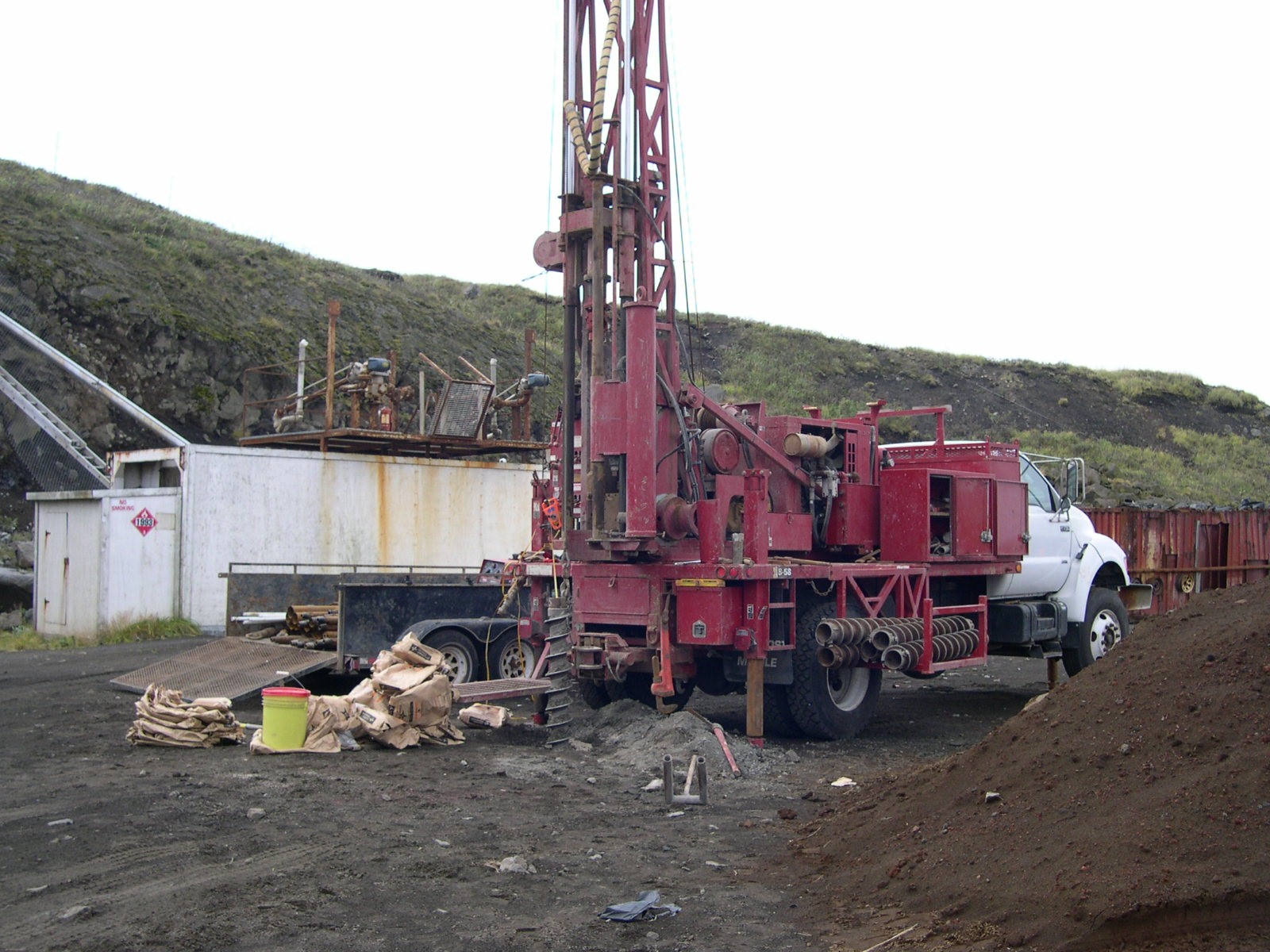
Photograph source and attribution: Nir Barnea / NOAA / National Archives ↗
Photograph reuse terms: Public domain (U.S. federal government work) ↗