The adjustment is overwhelmingly accumulated money
Kern County’s October 13 approved Fire Fund budget reset totals $22,724,238 in the staff report, but only $170,000 comes from increased current-year revenue estimates. What’s the Scoop With Broach reconciled the Fire Fund resource table with its proposed uses and found 99.25% comes from prior-year carryover or a transfer of previously designated apparatus money.
The sources are $18,189,778 in net fund balance carried forward, $4,364,460 released from the Apparatus Trust designation and $170,000 in additional revenue. The first two sum to $22,554,238. They expand this year’s spending or reserve capacity, but their availability is not evidence that the same resources will be generated again next year.
The county-issued October 13 meeting recap confirms supervisors approved the combined General Fund/Fire Fund package. This report examines the Fire Fund alone. Our earlier report analyzed the separate $65,567,771 General Fund adjustment; none of that amount is counted as a new Fire Fund resource here. The agenda’s Fire Fund figure is one dollar lower than the detailed staff table, whose arithmetic we use.
Operating relief shares the package with asset purchases
The use table assigns $6,904,814 to appropriations for contingencies, $5,558,960 to capital and apparatus replacement needs, and $4,504,000 to Fire Prevention property. Together those three categories total $16,967,774, or 74.7% of the Fire Fund adjustment. Reserves and designations take the remaining $5,756,464, or 25.3%.
Staff describes roughly $2.9 million of the contingencies as personnel-cost relief and roughly $4 million as operational support, including supplies, vegetation management, technology, and helicopter and vehicle maintenance. The attached draft accounting schedule separately identifies a $2,760,000 overtime adjustment and a $170,000 regular-salary adjustment. Those two salary entries total $2,930,000, explaining the rounded personnel figure without treating it as all overtime.
The $2.76 million overtime allocation alone is 16.2 times the $170,000 added revenue estimate. That comparison measures the different scales of a planned expense and the incremental revenue line; it does not establish that the Fire Fund lacks other ongoing revenue or that overtime is unauthorized. The staff report itself warns that personnel costs and overtime need active management to preserve coverage through the year.
A transfer is not two separate windfalls
The $4,364,460 Apparatus Trust amount supplies 19.2% of the reset’s resources. The attachments show an operating transfer out of the Vehicle/Apparatus fund and into the Structural Fire fund. Those are opposite sides of one movement of existing county resources, not two new sources to be added together.
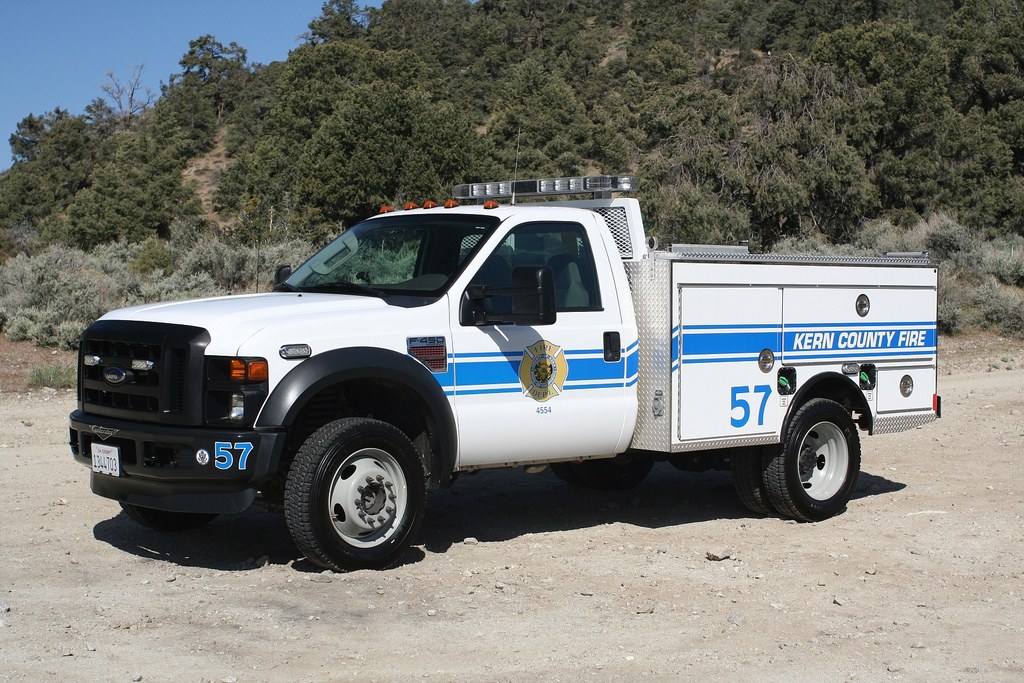
Staff says apparatus and capital needs had been deferred while final carryover was confirmed. The proposed replacement package includes radios, patrol vehicles and buildouts, aircraft-support equipment, a bulldozer and transport equipment, water tenders and command vehicles. The appropriation establishes capacity to acquire assets; it does not establish awarded prices, delivered vehicles or operational readiness of each purchase.
The $4.504 million property allocation is intended for relocating Fire Prevention and Arson into a county-owned facility. Staff links the need to inspection and permit-workforce growth and says consolidation would reduce dependence on leased space. The budget packet does not give an executed purchase contract or a quantified lifetime comparison of owning versus leasing, so an established saving cannot be calculated from this allocation alone.
Reserve protection is part of the response
The report directs $4 million to the tax-litigation reserve, $153,821 to the Shafter Operational Area designation and $1,602,643 to the general designation. Those amounts reconcile to the $5,756,464 reserve subtotal. The county argues these buffers help absorb disputed property values and emerging service costs without immediate reductions in fire operations.
This is not a finding that the approved budget is unbalanced; staff expressly says it remains balanced. It identifies a sustainability question inside that balanced plan: which operating pressures require recurring resources after carryover and one-time transfers are used. The public record does not provide a complete next-year forecast or establish a service cut.
Our original contribution is the Fire Fund-only source/use reconciliation, checked against the detailed accounting attachments and county approval recap. It uses budget records, not interviews, ledger auditing or an inspection of equipment. Later actual expenditures, overtime results, asset deliveries and reserve balances will determine the outcomes; they are not assumed from budget authorization.
Sources and further reading
October 13, 2026 Board agenda; staff recommendations, not minutes ↗
County-issued October 13 meeting recap, confirming approval of budget item 23 ↗
Photograph source and attribution: Kern County Fire Department ↗