California creates new crimes ahead of the November election
LOS ANGELES — Governor Gavin Newsom signed a 13-bill election package Saturday that creates new criminal penalties for seizing ballots and certified voting technology before results are certified, expands protections for vote-by-mail delivery and changes multiple election-administration rules before the November 3 midterms.
The most direct new prohibition is Assembly Bill 282. Its enrolled text makes it a felony to seize, cause or assist in the seizure of ballots, election records or certified voting technology from election officials before certification. The ordinary sentencing range is 16 months, two years or three years; a person in authority who directs someone else to carry out the seizure faces two, three or four years.
AB 282 is an urgency statute and says it takes effect immediately. Its definition of seizure is narrower than simply inspecting or requesting records: it concerns removing protected materials from the custody and control of authorized election officials, subject to exceptions already identified in state law.
Mail-ballot interference and election-record investigations are also covered
Senate Bill 259 creates a felony for a person with authority who directs someone under that authority to interfere with the delivery or return of a vote-by-mail ballot. It also creates a misdemeanor for a person who has charge of a mail ballot and interferes with its delivery to a voter, according to the governor's bill summary.
Assembly Bill 1664 requires a local agency, political subdivision or election official to notify the California Secretary of State and attorney general immediately—and no later than one calendar day—after learning of a warrant, subpoena or active law-enforcement investigation involving election records or certified voting technology in its custody.
AB 1664 allows the two state officials to intervene in connected court proceedings, challenge a warrant or subpoena on valid grounds or seek other relief. It does not require them to challenge every investigation, and it does not itself invalidate a warrant. The enrolled bill is an urgency statute that takes effect immediately and expires January 1, 2030.
The package reaches deepfakes, paid political posts and polling-place rules
Other signed measures extend California's restrictions on materially deceptive election media, permit penalties when people paid by campaigns fail to disclose sponsored online political content, expand election-language services and require an assessment of state resources needed to replace lost federal cybersecurity support.
Senate Bill 884 changes drop-off-location hours and the range of prohibited activity near polling places for elections held from 2026 through 2029. Senate Bill 1420 requires statewide procedures allowing a voter to cast a vote-by-mail ballot at a polling place without that ballot's identification envelope and adds early-voting information to the state voter guide.
The 13 measures have different operative language, sunset dates and implementation duties. Saturday's signing does not mean every provision has the same immediate effective date, and it does not replace county instructions governing where and how Californians vote.
Newsom frames the laws as a defense against Trump; that is the administration's position
Newsom, Secretary of State Shirley Weber and Attorney General Rob Bonta described the package as a response to threatened or attempted federal interference in California's election systems. Their statements are the administration's political and legal characterization, not a court finding that every anticipated federal action would be unlawful.
The laws follow litigation over President Trump's effort to impose new mail-ballot procedures for the 2026 election. The Associated Press reported that the U.S. Supreme Court rejected emergency relief that would have put those restrictions into effect this year, leaving existing state processes in place while the underlying lawsuits continue.
California's new statutes do not eliminate federal authority, immunize election materials from every lawful court order or conclusively resolve conflicts between state crimes and federal duties. If the provisions are invoked against federal officials or contractors, courts may have to address federal supremacy, immunity and the scope of state enforcement.
What California voters should—and should not—take from the signing
The package changes legal safeguards around election materials and administration; it does not alter the November 3 election date, prove that ballots have been seized or establish that a specific voter was denied a ballot. No prosecution under the newly signed laws was announced with the signing.
California counties begin mailing general-election ballots by October 5, and secure drop boxes begin opening October 6. Voters should use official state and county election pages to confirm registration, local voting locations and return instructions rather than relying on claims circulating through campaign or social-media accounts.
The next tests will be the implementing guidance, any court challenge and whether election officials invoke the new notice or criminal provisions before certification. What’s the Scoop With Broach will distinguish those concrete actions from political predictions about what the laws might do.
About the image
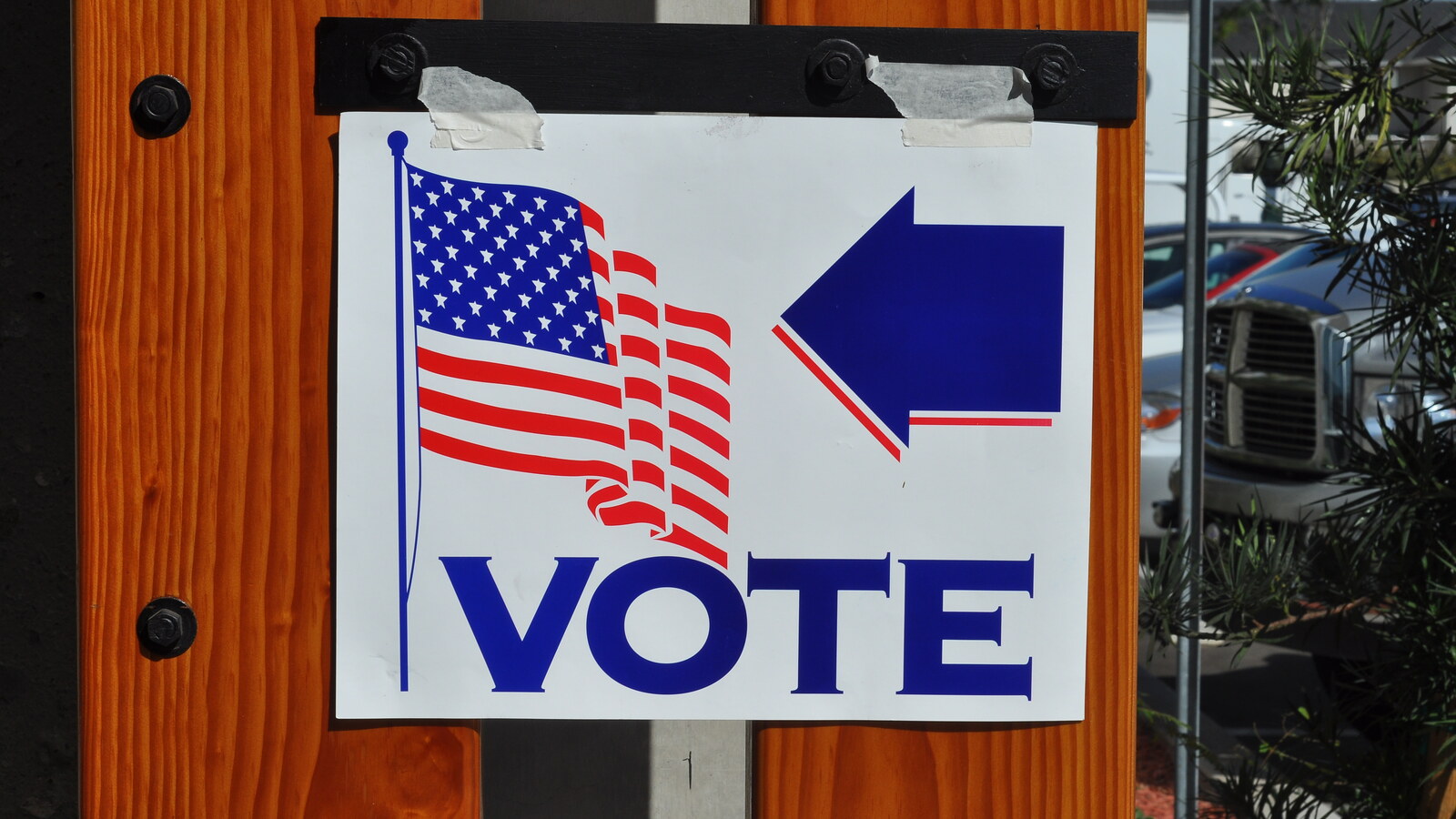
The accompanying image is an authentic 2008 photograph of polling-place signs in Orange, California, taken by Tom Arthur and published through Wikimedia Commons under the CC BY-SA 2.0 license.
It is a contextual file photograph. It does not depict ballot seizure, mail interference, a federal investigation, Governor Newsom, any person accused of a crime or Saturday's signing ceremony.
Sources and further reading
Governor of California: September 19 announcement and list of the 13 signed election bills ↗
California Legislature: AB 282 enrolled text, felony penalties and immediate-effect clause ↗
California Legislature: SB 259 bill record on interference with vote-by-mail delivery ↗
California Legislature: AB 1664 enrolled text, one-day notice rule and immediate-effect clause ↗
California Legislature: SB 884 bill record on polling-place and drop-off protections ↗
Wikimedia Commons: California polling-place photograph and CC BY-SA 2.0 license ↗