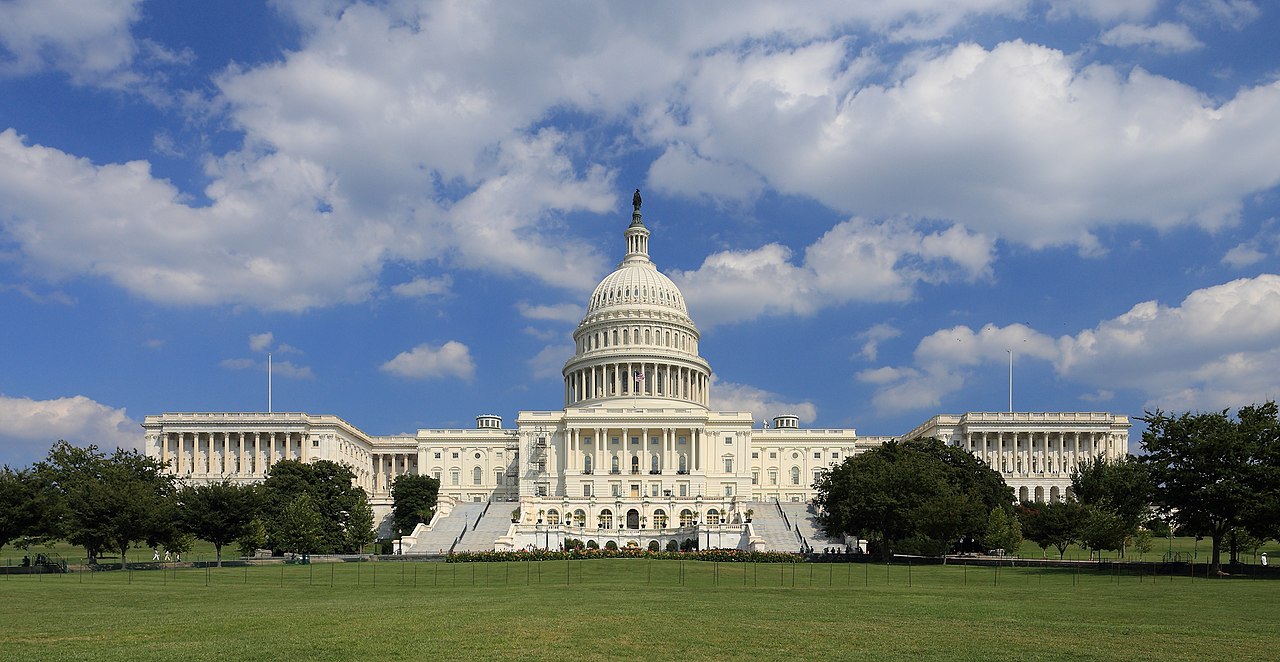
President signs H.R. 6500 into law
WASHINGTON — President Donald Trump signed H.R. 6500 into law Wednesday, completing an unusually early bipartisan effort to prevent a federal government shutdown when the new fiscal year begins October 1.
The White House identified the measure as the Continuing Appropriations and Extensions Act, 2027. It provides fiscal year 2027 appropriations for continuing federal projects and activities through December 11 and extends authorities for programs including surface transportation and veterans services.
The House approved the measure 370-48 on September 1 after the Senate passed it August 8. The president's signature means the October funding lapse is averted; it does not fund the government for the full fiscal year.
The legal status has therefore changed since this report was first published. The bill is no longer pending at the White House—it is enacted law, and December 11 is now the next government-wide funding deadline.
What the stopgap now protects
A lapse in funding can interrupt public services, delay pay for federal workers and require some employees to work without immediate compensation. The continuing resolution is designed to avoid those consequences while Congress negotiates a longer-term agreement.
House Appropriations Committee Chairman Tom Cole said the extension would preserve pay for service members, keep the Transportation Security Administration operating and maintain access to programs including nutrition assistance and disaster relief. Those are the law's intended continuity effects; they are not evidence that every agency or program receives a funding increase.
The measure is not a new full-year budget. It primarily extends existing spending authority for a limited period, leaving the government dependent on another congressional agreement before December 11.
For the public, the immediate result is that the October 1 shutdown threat has been removed. The wider federal budget fight has only been postponed.
The Senate changes that helped secure Democratic votes
The Associated Press reports that the Senate version includes restrictions preventing the Department of Homeland Security from transferring funds to the Border Patrol. It also delays a proposed rule that would give political appointees more authority to block federal grants viewed as inconsistent with the president's agenda.
Representative Rosa DeLauro, the top Democrat on the House Appropriations Committee, urged colleagues to support the measure and described the grant-rule delay as an important first step. She argued that disaster assistance should not depend on how a community voted.
Those provisions helped produce a broader coalition than the earlier House version. They do not permanently settle the underlying disputes over immigration enforcement, executive control of grants or the balance between military and domestic spending.
Claims by either party that the measure represents a complete policy victory go beyond what the temporary bill accomplishes.
Congress has postponed the hard decisions until December
Reuters reports that Congress has not completed any of the twelve annual appropriations bills needed to fund federal programs for the full 2027 fiscal year. The new law provides additional negotiating time; it does not substitute for those bills.
Republicans are seeking major increases in military spending while reducing many non-defense programs. Democrats are pressing for a bipartisan agreement that treats domestic priorities more evenly. Those differences will remain when lawmakers return to the negotiating table after the election.
The December 11 date creates another potential shutdown deadline during a compressed year-end calendar. Election results could also change the bargaining power of both parties before they attempt to finish the annual spending package.
Congress has prevented an immediate crisis from reaching the October deadline, but it has not solved the budget. The next test is whether lawmakers use the extra time to pass full-year funding instead of staging another last-minute confrontation.
Confirmed now—and what remains unresolved
Confirmed: President Trump signed H.R. 6500 on September 2; federal funding authority now runs through December 11; the House vote was 370-48; and the Senate had already approved the same measure.
Not completed: passage of the twelve full-year appropriations measures, a final agreement on spending levels after December 11 or removal of the next shutdown risk.
No allegation or disputed casualty claim is involved in this update. The signing is confirmed by the White House and independently reported by Reuters; the congressional vote history is documented by the Associated Press and official legislative materials.
Congress and the president prevented an October shutdown. They did not finish the federal budget, and the country now faces another deadline in December.
About the photograph
The lead image is an authentic September 2013 file photograph of the west front of the United States Capitol, where Congress approved H.R. 6500. Martin Falbisoner released the image under the Creative Commons Attribution-ShareAlike 3.0 license. It does not depict the September 2 presidential signing.
Sources and further reading
White House: President signs H.R. 6500 into law on September 2 ↗
Reuters: Trump signs the stopgap law averting an October 1 shutdown ↗
Associated Press: House passes the short-term funding bill 370-48 ↗
Government Publishing Office: H.R. 6500 legislative text ↗
House Appropriations Committee: Floor statement on H.R. 6500 and the December 11 deadline ↗
Wikimedia Commons: U.S. Capitol photograph and CC BY-SA 3.0 license ↗