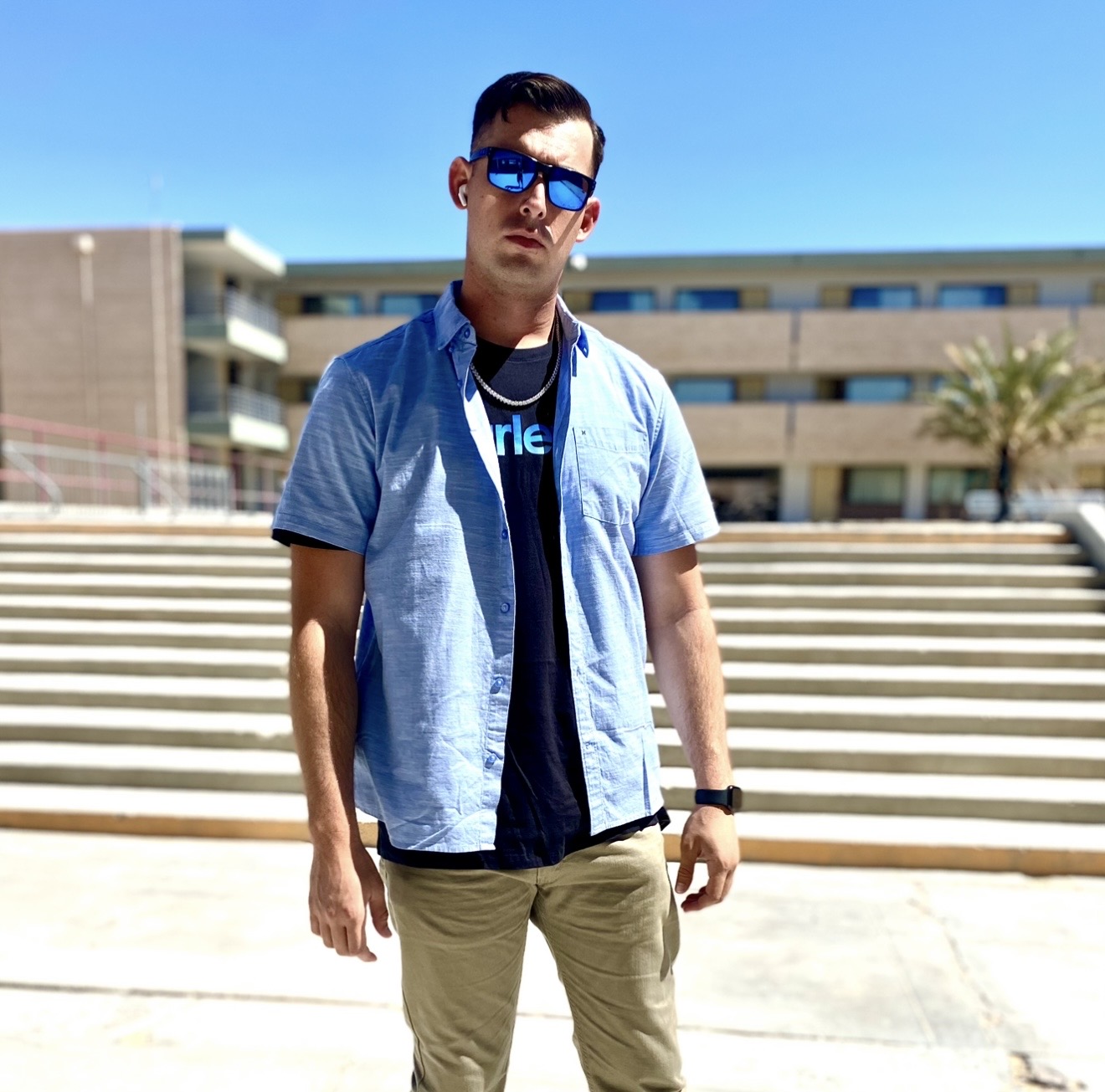
The bet: Make the introduction while both people are already out
HEMET, Calif. — Ed ‘Caz’ Cazares wants a dating-app match to lead to a meeting while both people are already out enjoying themselves.
That idea is the foundation of THRSHLD, a dating and social platform he is developing in Hemet with co-founder Ethan Howie. Its focus is venue-based matchmaking: helping people discover someone at the same location and turn an online introduction into an in-person conversation.
For Bakersfield, there is a local connection. In written interviews with What’s the Scoop With Broach, Cazares said the app’s venue database includes the Historic Bakersfield Fox Theater, the Nile Theater, Jerry’s Pizza & Pub, Tiki-Ko and Temblor Brewing Company, among other locations.
The project remains in active beta testing. Correspondence with Cazares and an early tester offers a picture of a small team refining its product, fixing problems and trying to build the community that would make the idea work.
‘Our goal isn’t to keep people staring at our app,’ Cazares wrote. ‘Ideally, someone uses THRSHLD, meets somebody, puts their phone down and maybe even deletes us the same day.’
Two founders, limited funding and a product still in development
Cazares said the concept grew from his frustrations with distant matches, conversations that ended in ghosting, and meeting people who looked different from their profile photographs. He brought Howie aboard as development began. Both are currently in relationships, he said, but those earlier experiences helped shape the project.
Cazares serves as founder, chief executive and developer; Howie is co-founder and chief operating officer. Cazares said both are U.S. Marine Corps veterans who served as noncommissioned officers, and neither is a combat veteran. He credits their service with shaping the discipline, teamwork and accountability they bring to the business.
Building from Hemet has meant working with limited resources and a smaller concentration of venues than larger Southern California markets, Cazares said.
‘We’ve had one investor contribute $400, and the remainder of the funding has been raised by me,’ he wrote. He did not provide a total funding figure. Without major backing, he said, the founders have retained control while handling much of the work themselves.
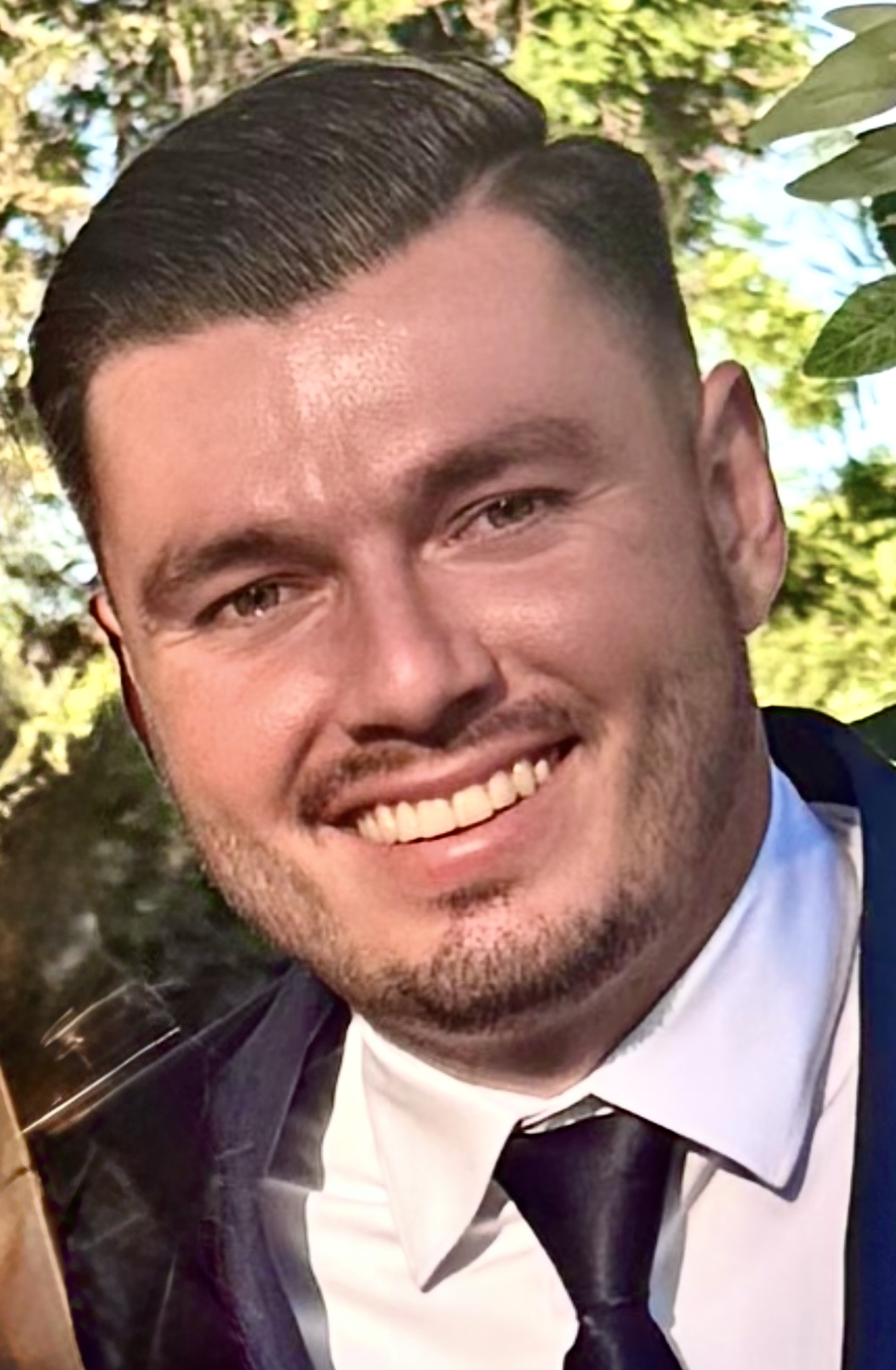
PHOTO: Photo courtesy of Ethan Howie
An unpaid tester found promise—and unfinished work
Tristen Morris said he and his girlfriend, Serena, tried the beta together. Morris disclosed that he met Cazares in the Marine Corps and is his friend. In a follow-up, Morris said they were unpaid testers helping a friend; Cazares separately said Morris has no ownership interest in the company.
Morris described onboarding as fast and straightforward. He liked the mix of open text fields and preset choices, including the option to seek a friendship or a relationship.
Testing also surfaced problems. Serena initially encountered a verification issue while wearing glasses, Morris said. He later confirmed that she was able to repeat verification with her glasses on. At their first venue, he reported a coordinate issue that he said Cazares addressed; a second location worked smoothly, according to Morris.
Morris did not confirm the first location’s fix with a repeat test. He said they returned, but a themed night made entry difficult, so they did not test there again.
The couple did match with each other, Morris said, and a small banner appeared to confirm it. He explained that they tried matching together because no one else was testing at the time. That describes a two-person test of the matching function, not evidence of strangers finding dates through an established user community.
‘Once the platform expands, we look forward to using it to connect with new friends,’ Morris wrote.
Sixteen TestFlight testers are not 16 confirmed active users
The demonstration materials also reflected a product under development. Cazares disclosed that an earlier walkthrough used an administrator account that bypassed normal location and identity-verification restrictions for demonstration and testing. In later correspondence, he reported recording the app’s first in-app match and identifying interface problems during that test.
His latest explanation said the recording’s small match banner preceded a fuller ‘It’s A Match!’ interface, which had since been updated and was ready for supplemental testing. He asked that supplied app screenshots be identified as beta imagery rather than the final production interface.
The company’s public beta page, checked immediately before publication, offered TestFlight access for iPhone and Firebase App Distribution access for Android. The page warns that beta software may contain bugs or unfinished features. Cazares said the company’s preferred production-launch window is November 2026, with App Store and Google Play releases intended before year’s end. That timeline is tentative.
Figures Cazares supplied for September 21 show the scale of the testing effort: 16 testers in the iPhone TestFlight group, with Build 9 recording 13 installations and 167 testing sessions. Sessions are not individual people, and installations across different builds cannot be added together to establish a unique-user total.
The company did not provide a confirmed active-user count, complete Android testing figures or reliable city-level analytics. Cazares said testing to date had taken place in Southern California. A TestFlight group containing 16 testers therefore should not be described as 16 confirmed active users.
Bakersfield listings are database support, not venue partnerships
Cazares clarified what the Bakersfield venue list means. A ‘supported’ location is mapped in THRSHLD’s database for its venue-based functionality. Inclusion does not signify a formal partnership, sponsorship, affiliation or endorsement by the business.
The company’s public venue finder displayed the Historic Bakersfield Fox Theater as a supported venue during a prepublication check. That listing confirms database support; it does not establish that the Fox Theater or any other venue has agreed to promote, sponsor or endorse THRSHLD.
Cazares said he would like to develop relationships with Bakersfield and Kern County venues, including working together on singles events. Those are aspirations for future outreach. The venue list alone does not establish an active local pool of people using the app.
Safety and privacy claims remain the company’s descriptions
For a service built around physical proximity, verification and location privacy are central questions.
Cazares said THRSHLD uses liveness verification and facial comparison to help establish that the person using an account corresponds to its profile photograph. The app is restricted to adults 18 and older, he said. Verification is not a background check.
According to Cazares, users cannot see one another’s GPS coordinates or precise positions within a venue, although they can infer that they are at the same location. He described blocking tools that remove the blocked account from the user’s in-app experience, along with reports reviewed by the development team and company leadership.
The company’s public safety page similarly says THRSHLD may use liveness and face-comparison technology and may provide reporting and blocking tools. Its privacy policy says the service may process location data, camera captures, liveness-check results and face-comparison results, and identifies AWS Rekognition, Google Firebase and related infrastructure as possible service providers.
Those are the company’s descriptions of its safeguards and data practices. Morris’s account supplies a limited user perspective; it does not independently establish the effectiveness of THRSHLD’s security, identity-verification or privacy protections.
A free tier, short-term upgrades and an advertising plan
The planned business model combines advertising with optional purchases. Cazares said the free experience would include 15 standard matchmaking swipes daily, with rewarded advertisements offering up to 10 more.
Four planned upgrades through the SUPPLY DROP marketplace—UNLIMITED, INTEL, SPOTLIGHT and SPARK—would each cost $9.99 for 24 hours. They would offer features such as unlimited standard swipes, seeing who liked a profile, profile promotion and signaling heightened interest. A $24.99 BLACK package would bundle the four and remove advertising for 24 hours.
Cazares said location-relevant advertising may use approximate location. He described preventing precise user location from being supplied to third parties as the company’s intent while it develops the advertising system. Those prices, features and advertising practices are company plans for a beta-stage product and may change before a production release.
The next threshold is a real community
For now, the work ahead includes refining the beta and attracting enough people to make introductions possible at individual venues. Morris and Serena’s experience illustrates that distinction: the couple could test a match, while Morris hopes to meet new friends as participation grows.
Cazares’s ambition is to make the app a brief step toward something that happens beyond the screen.
‘We want relationships to happen face-to-face, not screen-to-screen.’
How this story was reported
This feature is based on written interviews and follow-up correspondence with Cazares and Morris, demonstration disclosures supplied by Cazares, September 21 testing figures, and prepublication checks of THRSHLD’s public beta, venue, safety and privacy pages. Howie did not provide a separate interview for this version of the story.
The founder portraits were supplied with permission for publication and were not generated or retouched. THRSHLD remains in beta; this report is not an independent product recommendation, security audit or privacy audit.
Sources and further reading
THRSHLD: official press room, company facts and founder photography ↗
THRSHLD: public iPhone and Android beta access ↗
THRSHLD: supported-venue finder ↗