A rare return to the same epic
Wilson's 2017 English translation of 'The Odyssey' has sold more than one million copies and became a central text in classrooms and public debate. She told the Associated Press she is now halfway through a complete retranslation, not a lightly revised edition.
Translators regularly correct errors or update introductions, but producing a wholly new version of the same ancient poem after a recent bestseller is unusual. Wilson says her understanding of Homer and her own translating practice have changed enough to justify beginning again.
The decision presents translation as interpretation rather than substitution. Ancient Greek words carry histories, social hierarchies and tonal possibilities that no single English phrase can preserve all at once.
Read the source: Associated Press: Emily Wilson is retranslating The Odyssey ↗
The first translation changed the audience
Wilson used a regular English meter and direct language that many readers found accessible without treating the poem as simple. Her choices about enslaved women, power and the hero's conduct also drew intense attention, including criticism that the translation imposed modern politics.
Every translation makes choices shaped by language and time, including versions that readers have learned to consider traditional. Naming those choices openly can make the process more rigorous because readers can compare what is gained, softened or emphasized.
The success of Christopher Nolan's film adaptation and renewed public interest in Homer have expanded the potential audience. That attention can flatten the poem into adventure spectacle, but it can also send readers back to the competing meanings of the source.
Why the broader context matters
Digital culture increasingly shapes ordinary consumer decisions, personal reputation and the relationship between creators and their audiences. The consequences of Emily Wilson's decision to produce a complete new translation of Homer's Odyssey after the success of her 2017 version are not limited to celebrities: readers, teachers, students, classicists, translators and publishers responding to renewed interest in Homer may encounter the same problems through familiar shopping accounts, copied profiles, misleading messages or unauthorized uses of a recognizable identity.
Platforms, companies and public agencies each control only part of this landscape. A platform may remove an account, a business may provide transaction records and a government agency may investigate a complaint, but none of those actions should be mistaken for an automatic promise of reimbursement, account restoration or a guaranteed legal victory.
Documentation is particularly important when online content disappears or account details change. Saving dates, visible usernames, transaction records and relevant links can make a complaint more useful, while sharing passwords, verification codes or additional personal information with an unknown contact can make an existing problem substantially worse.
A classic survives through disagreement
A new Wilson translation will not replace every earlier version. Students and general readers benefit from putting different renderings side by side and asking why a sentence changes character, blame or rhythm.
The project is news because a famous translator is willing to challenge her own celebrated work. Its larger cultural argument is that fidelity is not achieved once and sealed forever; it is tested through renewed attention to language, history and readers.
The strongest available account comes from Associated Press reporting based on an interview with Wilson, publishing records and translation experts, which provides the clearest basis for checking the underlying facts against claims circulating elsewhere. Independent reporting and official guidance serve different purposes: one can document a developing dispute, while the other helps establish the governing requirements, current procedures and questions that still need an answer.
There are important limits to what can be established now. Wilson is about halfway through the new translation; it is not a published book yet, and describing it as a correction of a failed first version would misrepresent her stated purpose. Treating an unresolved question as settled would give readers a certainty the available evidence does not support. New statements, updated documents or additional reporting could clarify the situation, but none should be presumed before they appear.
The next meaningful development to watch is completion, publication details and close comparison of how the new text handles voice, meter, gender, violence and ambiguity. Until then, people directly affected should rely on the institution responsible for the decision or service, check the dates attached to public guidance and be cautious about summaries that omit the legal, financial or local context.
Another useful distinction is the difference between an announcement and an outcome. Reporting on Emily Wilson's decision to produce a complete new translation of Homer's Odyssey after the success of her 2017 version can establish what has been proposed, ordered, alleged or scheduled, but subsequent implementation may depend on separate decisions by Associated Press reporting based on an interview with Wilson, publishing records and translation experts. That is why readers should check whether an update describes a completed action, an ongoing process or a statement of intent.
People following this issue should also consider whom the information is meant to help. For readers, teachers, students, classicists, translators and publishers responding to renewed interest in Homer, a clear explanation of dates, limitations and responsible institutions is more valuable than dramatic language unsupported by records. Responsible coverage should make those boundaries visible instead of presenting assumptions, online speculation or preliminary numbers as established conclusions.
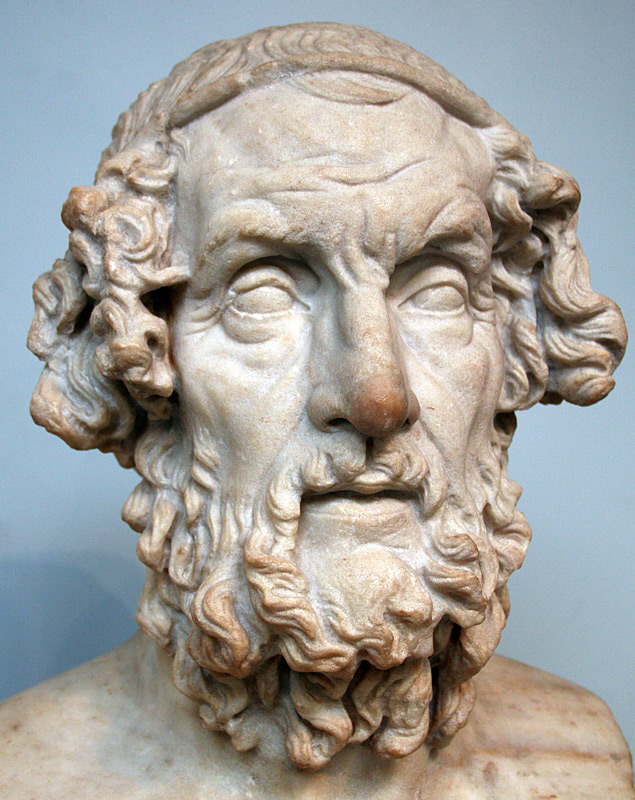
The featured photograph is an authentic, credited documentary image selected for its relevance to the subject. It should be understood as visual context, not evidence that the photographer witnessed the specific announcement, court proceeding, community event or interaction described in this article unless the accompanying caption explicitly says so.
A careful timeline also matters. Developments concerning Emily Wilson's decision to produce a complete new translation of Homer's Odyssey after the success of her 2017 version should be evaluated according to when a decision was made, when it was reported and whether anything changed afterward. Older background can remain useful, but it should never be presented as breaking news, and a future event should not be described as though it already occurred.
Sources and further reading
Associated Press: Emily Wilson is retranslating The Odyssey ↗
University of Pennsylvania: Emily Wilson ↗
